Preparations & Christmas Services at St Charles
24th December 2025
“Christmas hath a darkness Brighter than the blazing noon.”
— Christina Rossetti
St Charles Borromeo Church was resplendent with flowers, lit candles and a full congregations at the Christmas services at Saint Charles.
The church was quietly and faithfully prepared to welcome parishioners and visitors into the heart of the season. Much of that preparation was prayerful rather than hurried — a steady, thoughtful readying of space, sound, and spirit for the celebration of Christ’s birth.
The choir had been preparing with dedication for the Christmas carols and the Christmas Masses. Their rehearsals have filled the church with remarkable sound — rich harmonies, confident voices, and moments of real beauty that lift the heart even in an empty nave. These were not rehearsals for performance, but for service. The music has been shaped carefully to support the liturgy, to lead prayer, and to help the familiar words of Christmas speak with renewed clarity and depth.
Alongside the music, the church itself was gently transformed. Flowers brought warmth and colour to the sanctuary, while the Christmas tree stood as a simple but powerful sign of life, light, and hope. Together, they frame the sacred space in which the Christmas story will once again be proclaimed — not as something distant or symbolic, but as a living truth.
None of this would have been possible without the many people whose work is often unseen. We give thanks for Fr Phil our priest, whose prayerful leadership draws all these preparations together; for the church cleaners, whose faithful care ensures the sacred space is ready to welcome all who enter; for those who serve as altar servers; and for those involved in pastoral care and outreach.
We are grateful for the ladies in the repository, and for all who give their time quietly and generously in support of parish life — those who prepare and safeguard resources, arrange the liturgy, support the music, steward the collections, serve as ministers of the Eucharist, and assist in countless practical ways behind the scenes. We also acknowledge the many volunteers whose contributions are not named but are deeply valued. Together, in ways seen and unseen, their service reflects the very heart of the Christmas message — love given freely, faithfully offered, and often unnoticed, yet profoundly felt.
All of this preparation came together in the Christmas services themselves. The music, the readings, the prayers, and the setting each played their part, drawing us toward the same mystery: God choosing to come among us in humility and love. The beauty we encounter — in sound, in symbol, and in shared worship — is not there to distract, but to focus our hearts and minds on what truly matters.
As the Christmas Masses were heard a church prepared in faith, a choir ready in voice, and a community invited to come and encounter the joy, peace, and wonder of Emmanuel — God with us.
“The Word became flesh and dwelt among us.” (John 1:14)
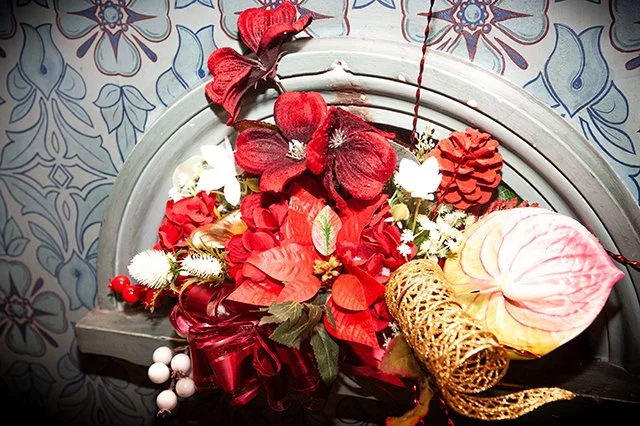

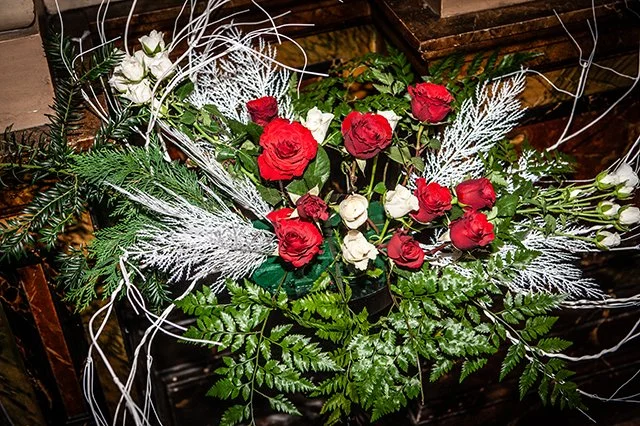
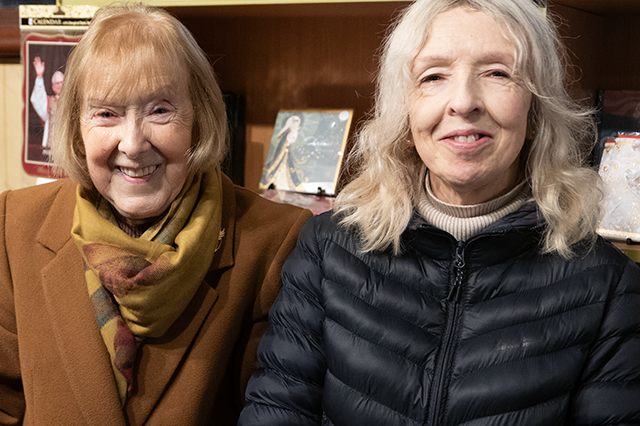
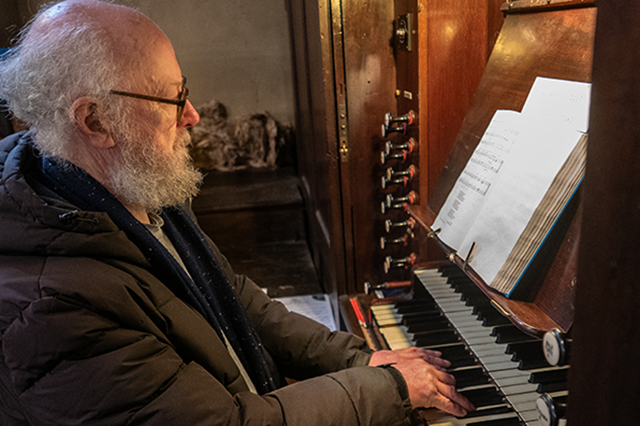
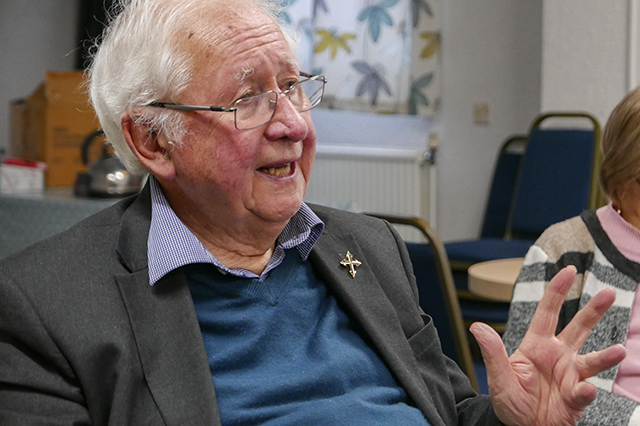
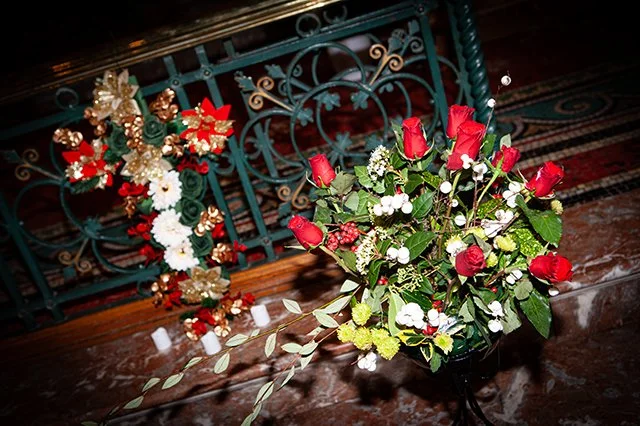
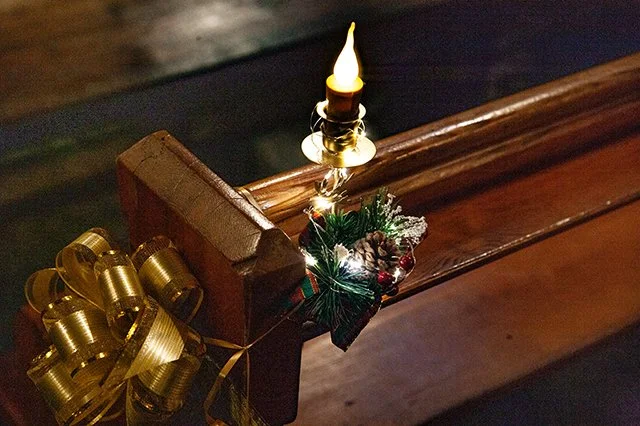
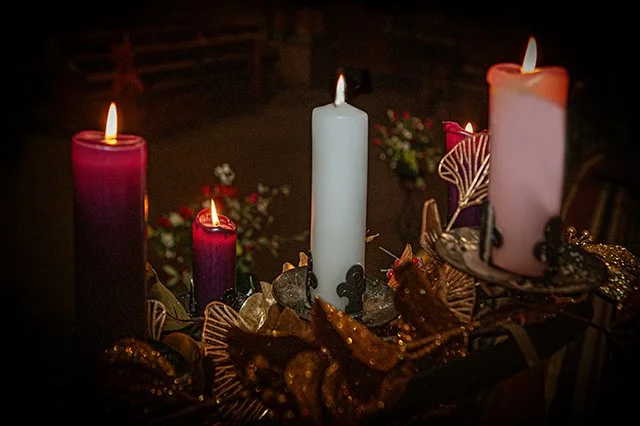

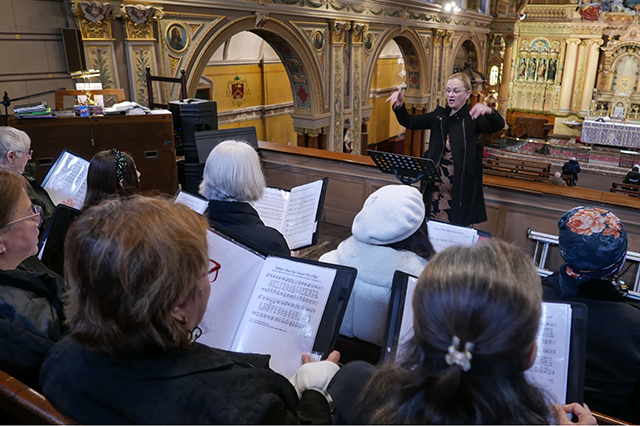
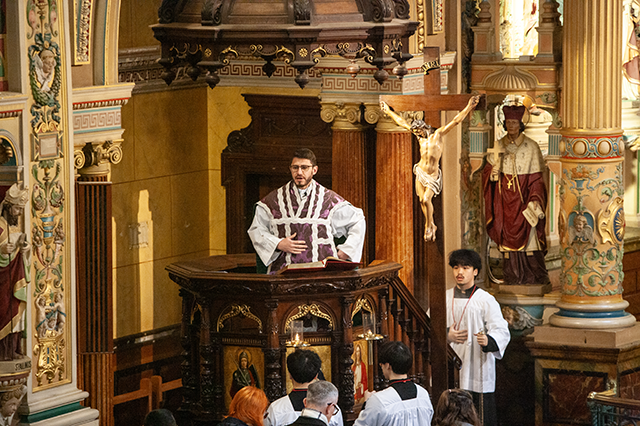
Some of the many people who have contributed to the church’s Christmas preparations.
Christmas Mass at St Charles
At the heart of all this preparation were the people who came — the parishioners, families, and visitors whom God himself gathers. Some arrive week by week; others come after time away, carrying memory, hope, questions, or quiet longing. Some come in joy, others in grief or uncertainty. Each is known and welcomed not first by the parish, but by God, who meets his people where they are. In the simple act of gathering — of crossing the threshold, taking a seat, lifting a voice in song, or sitting in silence — the Christmas story continues to unfold. The church became what it is meant to be: not just a building prepared, but a living community drawn together by grace, ready to receive the promise of Christ anew.
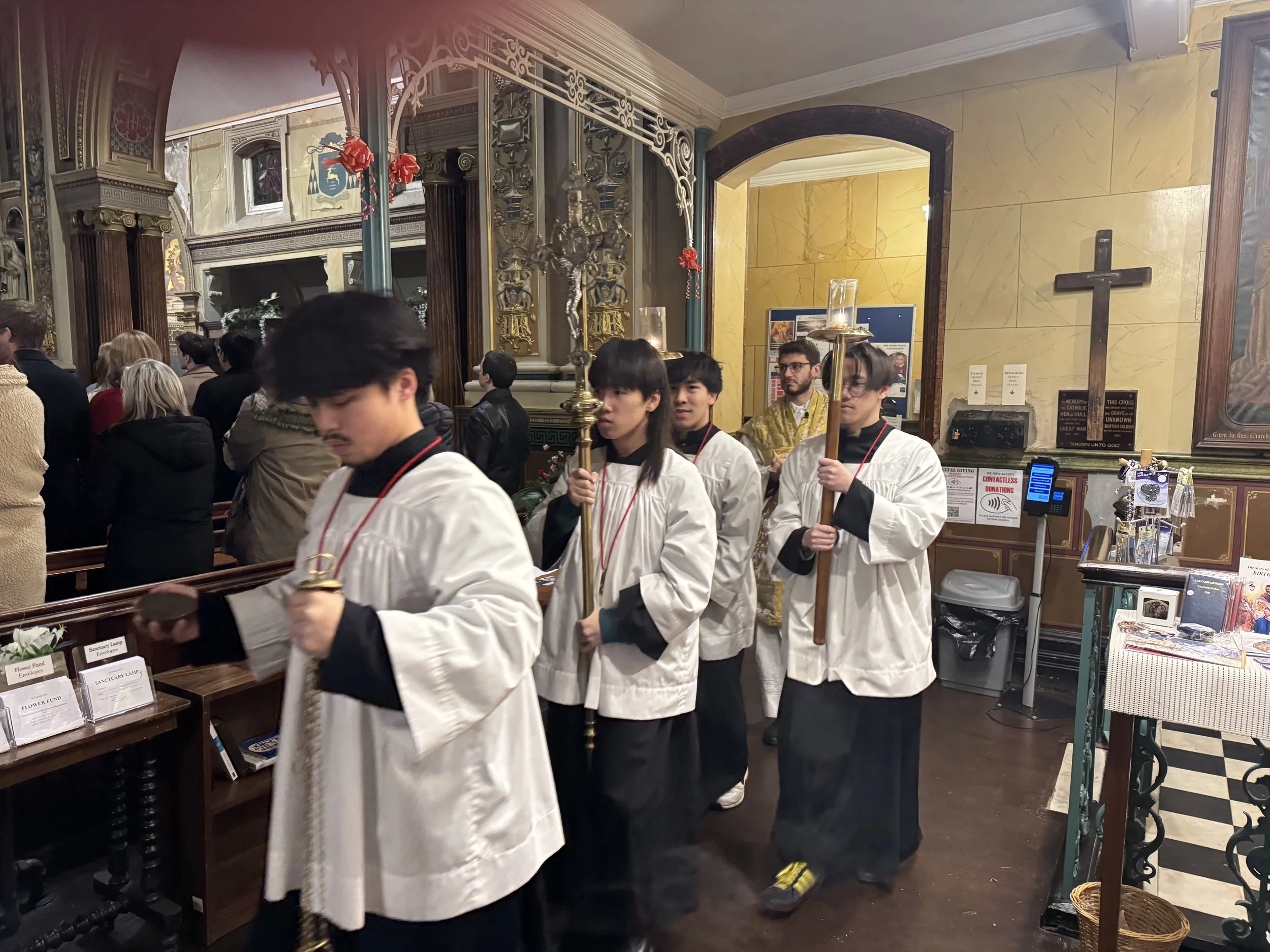
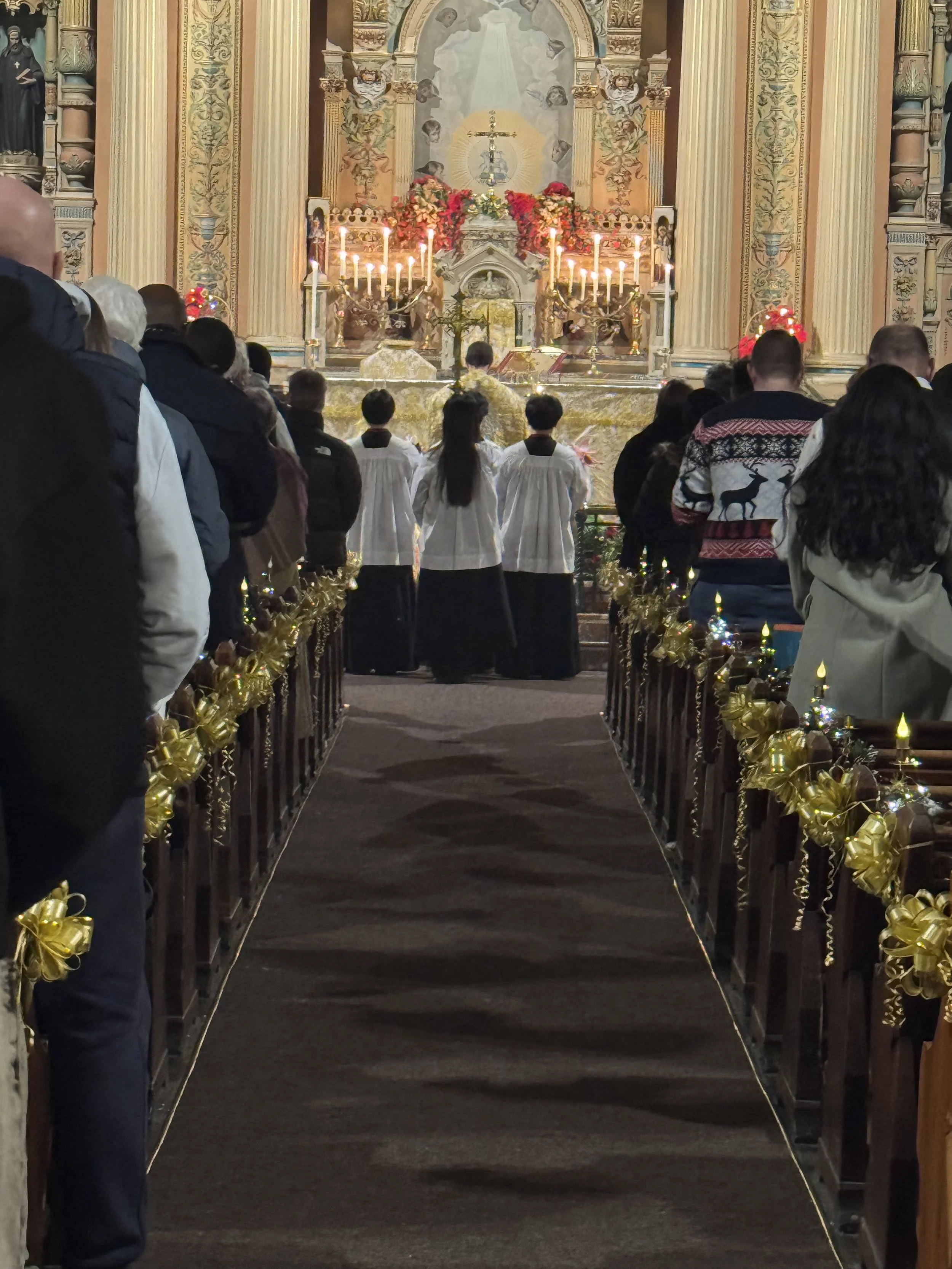
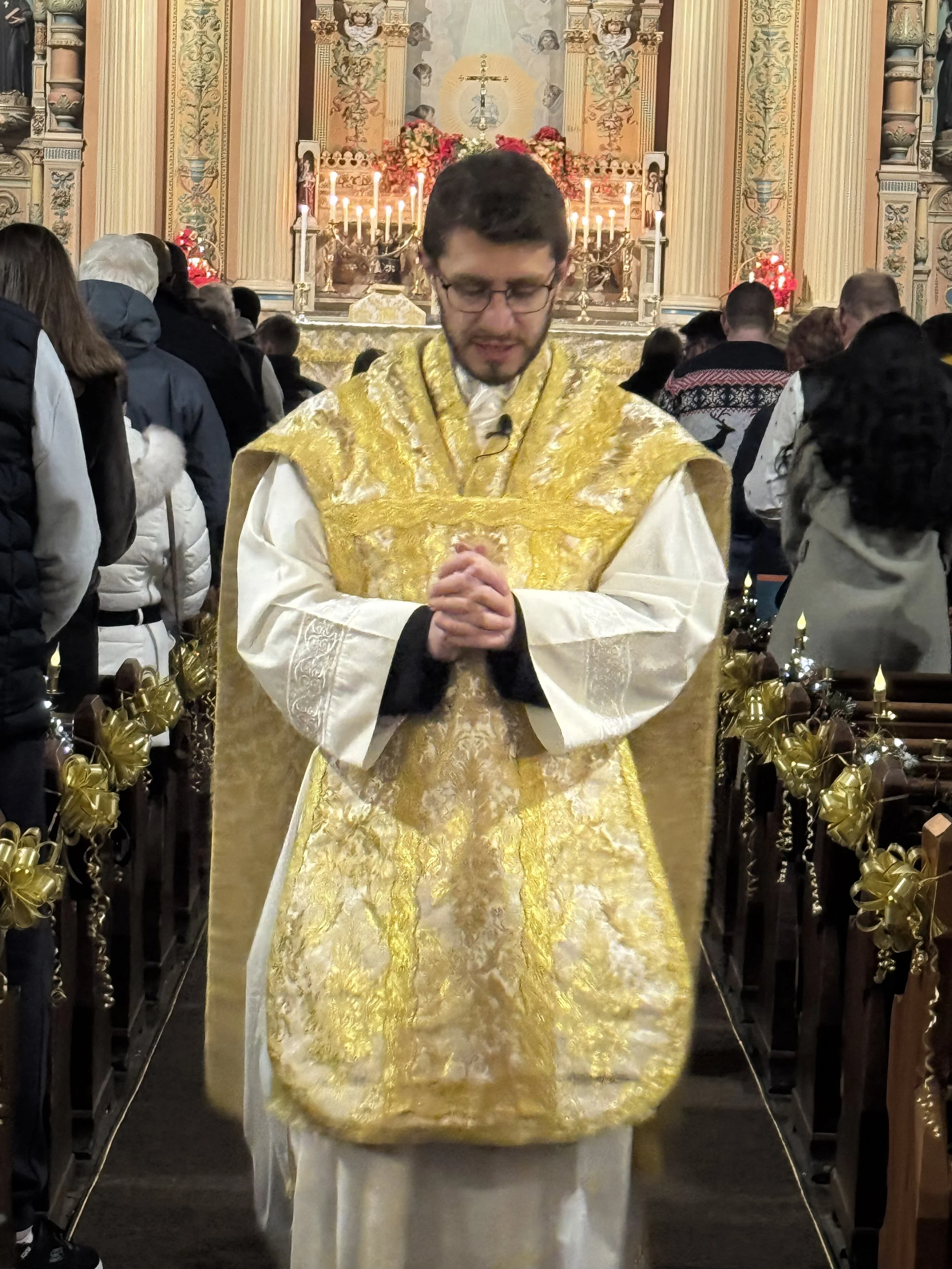
FR Phil leads the Christmas Eve Mass at a packed St Charles which followed carols from the magnificent St Charles Choir
Sung by St Charles Choir at Christmas Day Mass
Recorded live during the liturgy
A Prayer for Families at Christmas
A message from Emeritus Bishop Terence Patrick Drainey
22 December 2025
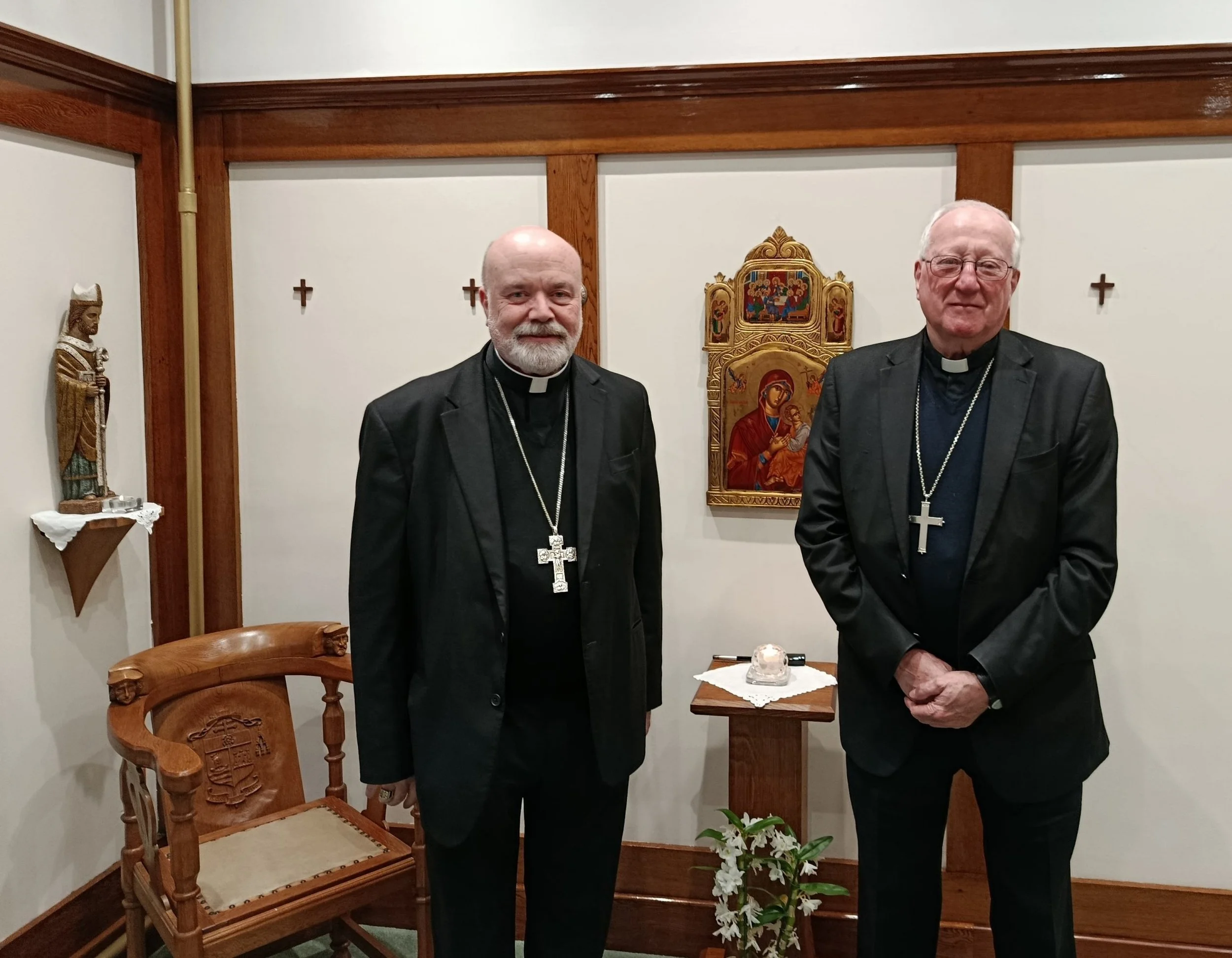
Today, the Holy Father, Pope Leo XIV, has accepted my resignation as Bishop of Middlesbrough and has appointed Bishop Marcus Stock, the Bishop of Leeds, as Apostolic Administrator of the Diocese of Middlesbrough.
I am very grateful to His Holiness for having entrusted the care of this diocese to me for nearly 18 years. It has been a joy and privilege to serve the faithful, clergy and religious.
I will remain living in the diocese in my retirement and hope to be of assistance to Bishop Stock and to the diocese in any way that might be required.
I thank Bishop Stock for taking on the role that the Holy Father has given him and I have no doubt that his ministry among us will bring us many blessings and help us all to journey onwards in the light of the Gospel.
A MESSAGE TO THE CLERGY, RELIGIOUS AND LAY FAITHFUL OF THE DIOCESES OF MIDDLESBROUGH AND LEEDS
22 December 2025
My Dear Brothers and Sisters in Christ,
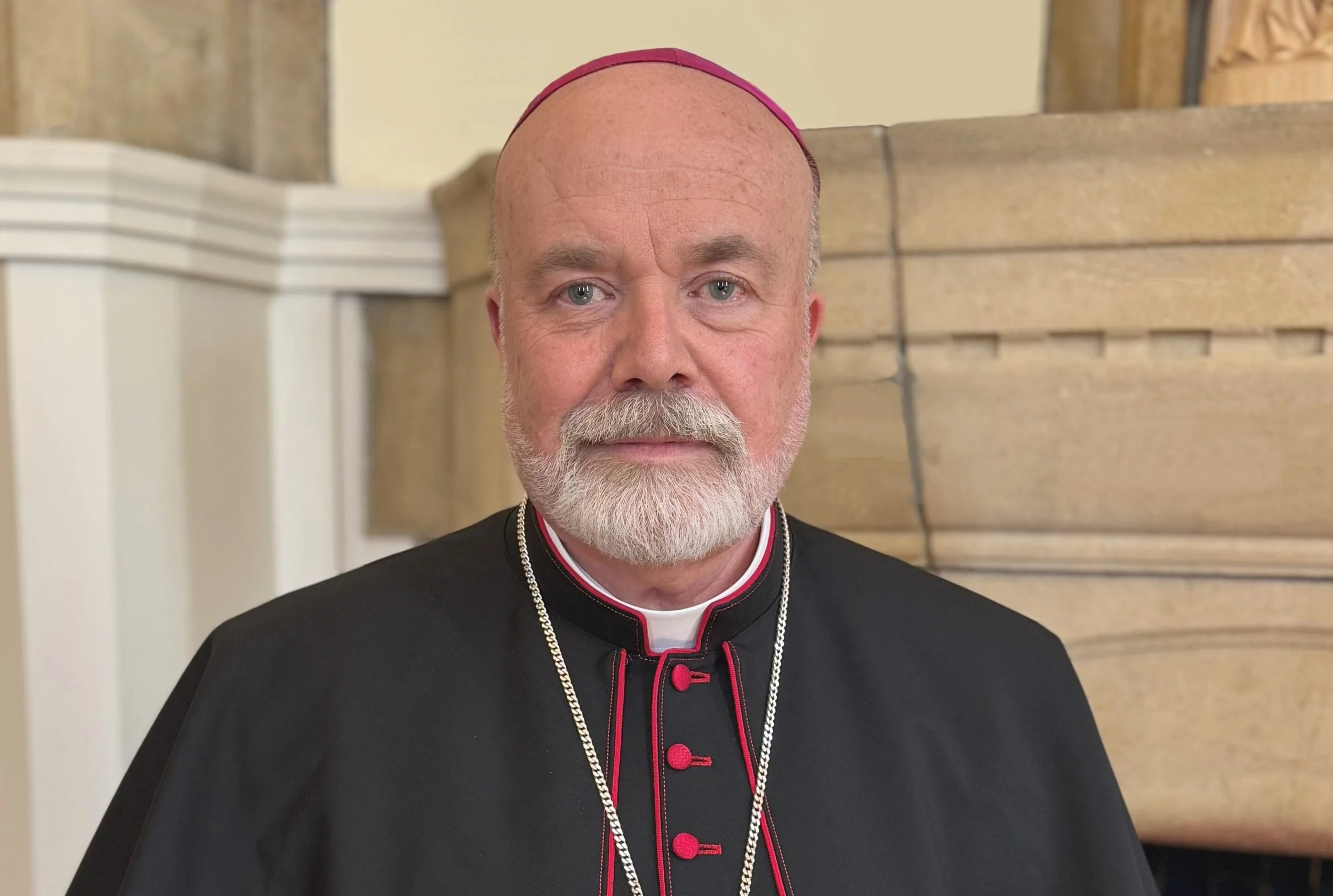
Following acceptance of the resignation in accordance with Canon 401 §1* of the Rt Rev Terence Patrick Drainey as Bishop of Middlesbrough, His Holiness Pope Leo XIV has appointed me as Apostolic Administrator of the Diocese of Middlesbrough, while retaining my current office as Bishop of Leeds.
Placing all my faith in our Lord Jesus Christ, and the prayers of His Blessed Mother, I will do my utmost to fulfil the mission which His Holiness Pope Leo XIV has entrusted to me as Apostolic Administrator of the Diocese of Middlesbrough in addition to my ministry as the Bishop of Leeds. It is a comfort to know that in his retirement Bishop Terry will continue to reside in the diocese and that I shall be able to call on his knowledge, wisdom and advice to assist me.
It is the Holy Father’s wish that I explore with the clergy, lay faithful and religious of our two historic sister Dioceses of Middlesbrough and Leeds how we might journey together in mission, work in close collaboration and gain from each other’s strengths in order to secure the future of the Church’s witness to Christ across the regions we serve.
I look forward to meeting and getting to know the priests, deacons and religious of the Diocese of Middlesbrough, and to serving both them and the lay faithful now entrusted to my care as Apostolic Administrator.
Both Middlesbrough and Leeds dioceses share not only the saints and sacred places of the ancient Kingdom of Northumbria, but also the post-industrial heritage of Yorkshire’s historic North, East and West Ridings. We also share a common origin from 1878, when the Diocese of Beverley was divided into the current two sister dioceses by Pope Leo XIII.
Trusting in God’s providence, I pray that the divine graces we have received in this Holy Year of Jubilee will guide us and shape us on our journey of hope and discover together the future that God wills for us.
I humbly ask all those I am now called to serve to pray for me; that Almighty God will grant me the spiritual fortitude I will need to undertake this new role. Through the intercession of Our Lady of Unfailing Help and St Wilfrid, patrons of both the Middlesbrough and Leeds Dioceses, may Christ our Lord be our Way, our Truth and our Life.
With every blessing, as we prepare to celebrate the Nativity of Our Lord and Saviour Jesus Christ,
+Marcus
Bishop of Leeds
Apostolic Administrator, Diocese of Middlesbrough
December 22 2025
*Canon 401 §1: A diocesan bishop who has completed the 75th year of age is requested to present his resignation from office to the Supreme Pontiff, who will make provision after he has examined all the circumstances.
Thanks to Emeritus Bishop Terry
22 December 2025
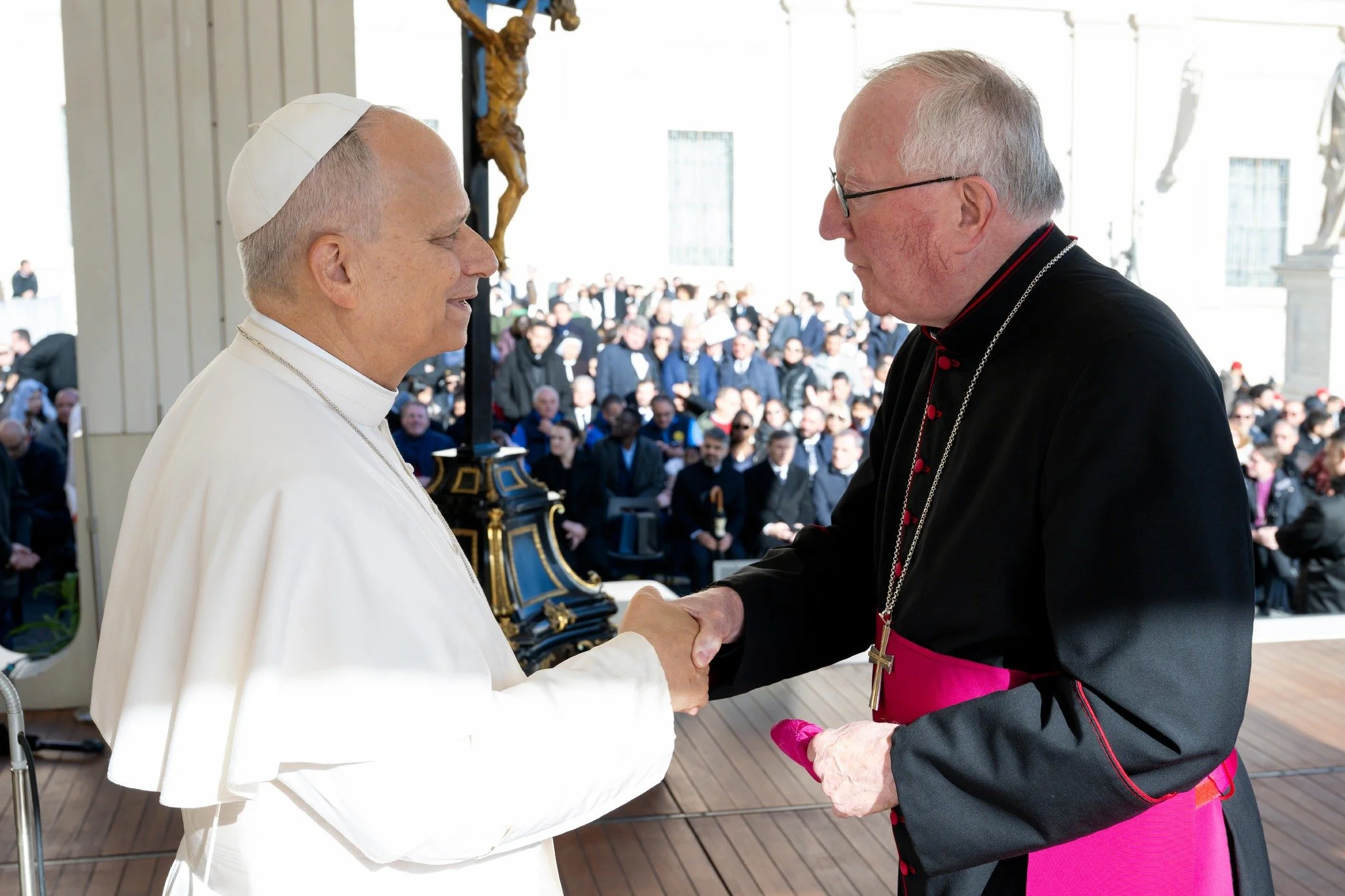
Bishop Terry with the Holy Father Pope Leo
For Bishop Terry, we offer the simplest and most sincere words available to Christians: thank you, and may God bless you. Thank you for the years of travel, for the confirmations, for the vigils and ordinations, for the long meetings and the pastoral visits, for the steady governance, for the patience, for the preaching, for the prayers, and for the willingness to lead. Thank you for representing our diocese to the wider Church, for speaking when conscience demanded, and for remaining present even when the climate became difficult.
May the Lord now grant you many years of peace, health, and joy. May retirement open into deeper communion with Christ. May Our Lady, whom you have invoked throughout your ministry, continue to watch over you. And may Saint Charles Borromeo—the great reforming bishop whose name our parish bears—intercede for you as you embark on the next stage of discipleship.
Go with our affection, our gratitude, and our prayers. And may the blessing you have given so often to others now rest upon you.
Meetings with Fr Phil
Congregation, Collaboration, Community and Communications
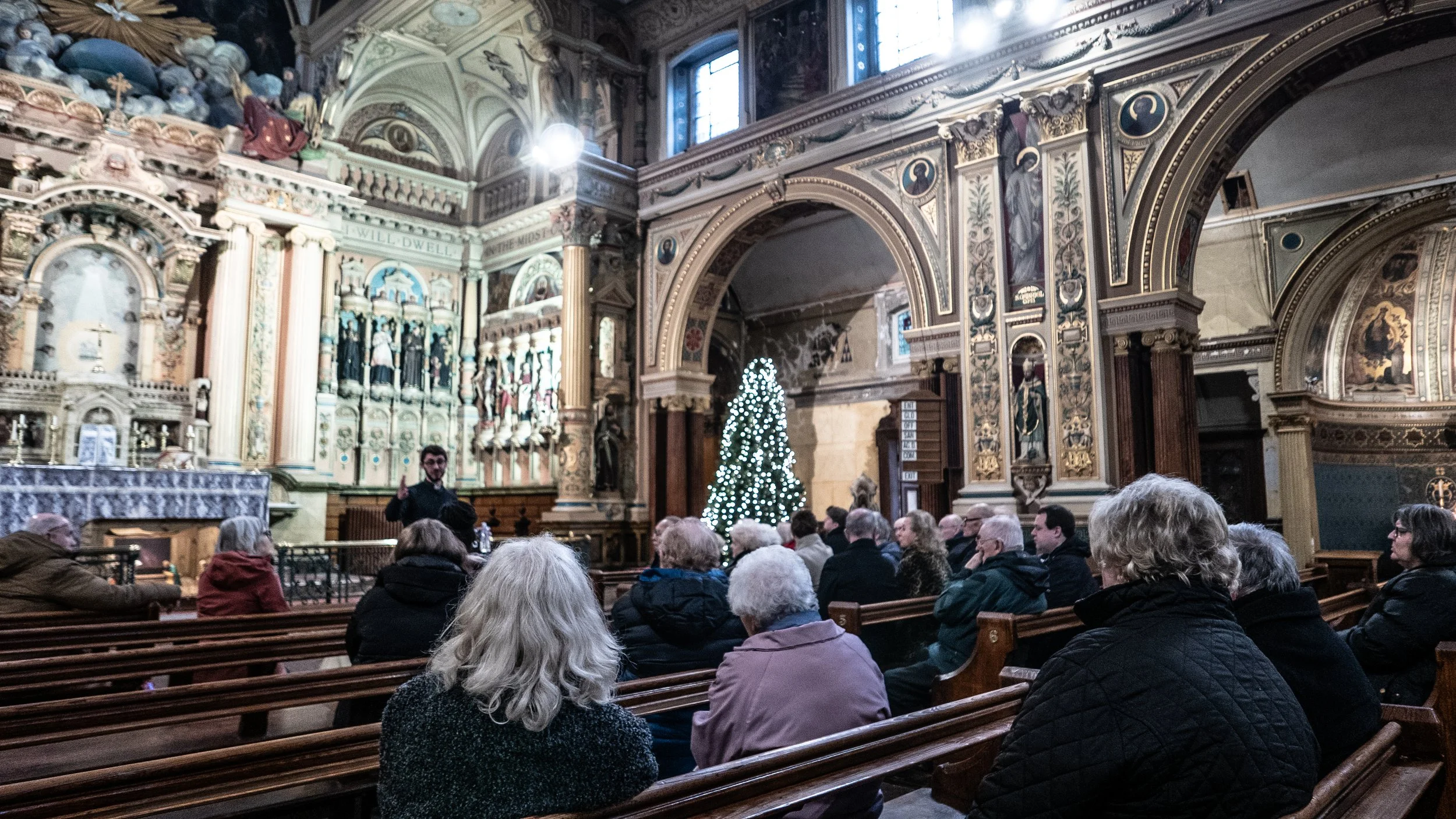
A programme of parish-wide consultation led by Fr Phil reached another important stage on Sunday 21 December, when more than fifty parishioners at St Charles Borromeo remained in church after Mass for an extended listening and feedback session. The gathering followed earlier meetings held at Hedon and at Withernsea, and together the three sessions are shaping a clearer picture of the needs, expectations and opportunities that lie ahead for this pastoral grouping.
Fr Phil opened Sunday’s meeting by thanking parishioners for turning out in such strong numbers and by stressing the purpose of the consultation: building transparency, strengthening communication, and ensuring that future decisions reflect the lived experience of parish life. He reminded those present that constructive listening is part of the Church’s wider synodal mission, and that this process is not about imposing a model from above but discerning together what will allow faith, community and ministry to grow.
He then updated parishioners on current building developments at St Charles. The priority project remains the renovation of accommodation on site, making it suitable for a resident parish priest. The works are designed not simply to modernise rooms but to ensure that the parish has a base that is pastorally useful, financially sustainable and equipped for long-term ministry. Assistance has already been drawn from statutory bodies and advisory agencies, and the parish will continue to collaborate with them as planning moves forward.
Because the church interior currently has to serve multiple purposes, Sunday’s meeting took place directly in the main worship space. Fr Phil noted that once accommodation improvements and future internal adjustments are completed, St Charles will have the capacity to host social time after Mass — including space set aside for coffee, informal conversation, parish briefings and organised pastoral gatherings. For now, however, the church itself is acting as the listening venue, ensuring that every voice can be heard without logistical barriers.
One of the strongest themes on Sunday was the fast-approaching bicentennial of St Charles. Parishioners recognised that a 200-year anniversary is not simply a matter of scheduling a few events but requires long-term planning, creativity and public involvement. Many felt that the bicentennial offers a once-in-a-generation opportunity to reintroduce St Charles to the wider city — opening the church for guided tours, exploring heritage displays, and telling the story of its social, educational and charitable contributions.
Parishioners also highlighted the multicultural character of the current congregation. Rather than viewing this as a challenge, contributors saw it as a sign of vitality. Fr Phil pointed to the new parish website as being an effective channel for communications and a parishioner encouraged the use of social media. Optimising these channels for maximum reach was also raised as a suggestion. Looking forward to the bi-centenary Fr Phil said he was open to using billboards to help promote the church as Hull’s hidden gem
Music and culture also received attention and Fr Phil was open to the church being used to host musical events.
Fr Phil welcomed the creative thinking but reminded everyone that such plans depend on volunteer support — organisers, stewards, publicity helpers and hospitality teams. He encouraged parishioners not simply to propose ideas but to consider where they personally might become involved.
Across all three communities — coastal, suburban and city-centre — similar realities are being voiced. Buildings require maintenance; clergy resources are limited; congregations contain both long-standing members and newcomers; and the mission field includes many who have quietly drifted from practice.
What has become clear is that parishioners value being informed rather than surprised. They are ambitious, but grounded in the belief that faith communities flourish through collaboration.
Fr Phil stressed that consultation is not an event but a process. Notes and suggestions from Hedon, Withernsea and St Charles will be gathered and fed into practical planning. Further briefings will follow as building work progresses and as bicentennial preparations begin to take shape. Parishioners left with the reassurance that future steps will not be taken behind closed doors.
For now, the message is forward-looking and invitational: three churches, one mission; heritage to honour; communities to serve; and a bicentennial that can re-energise parish life. Every voice is welcome, every idea will be considered, and the next chapter will be shaped together — not by a handful of people, but by the whole parish family.
Delexi Te Talk - Hull Saturday 6th December 2025
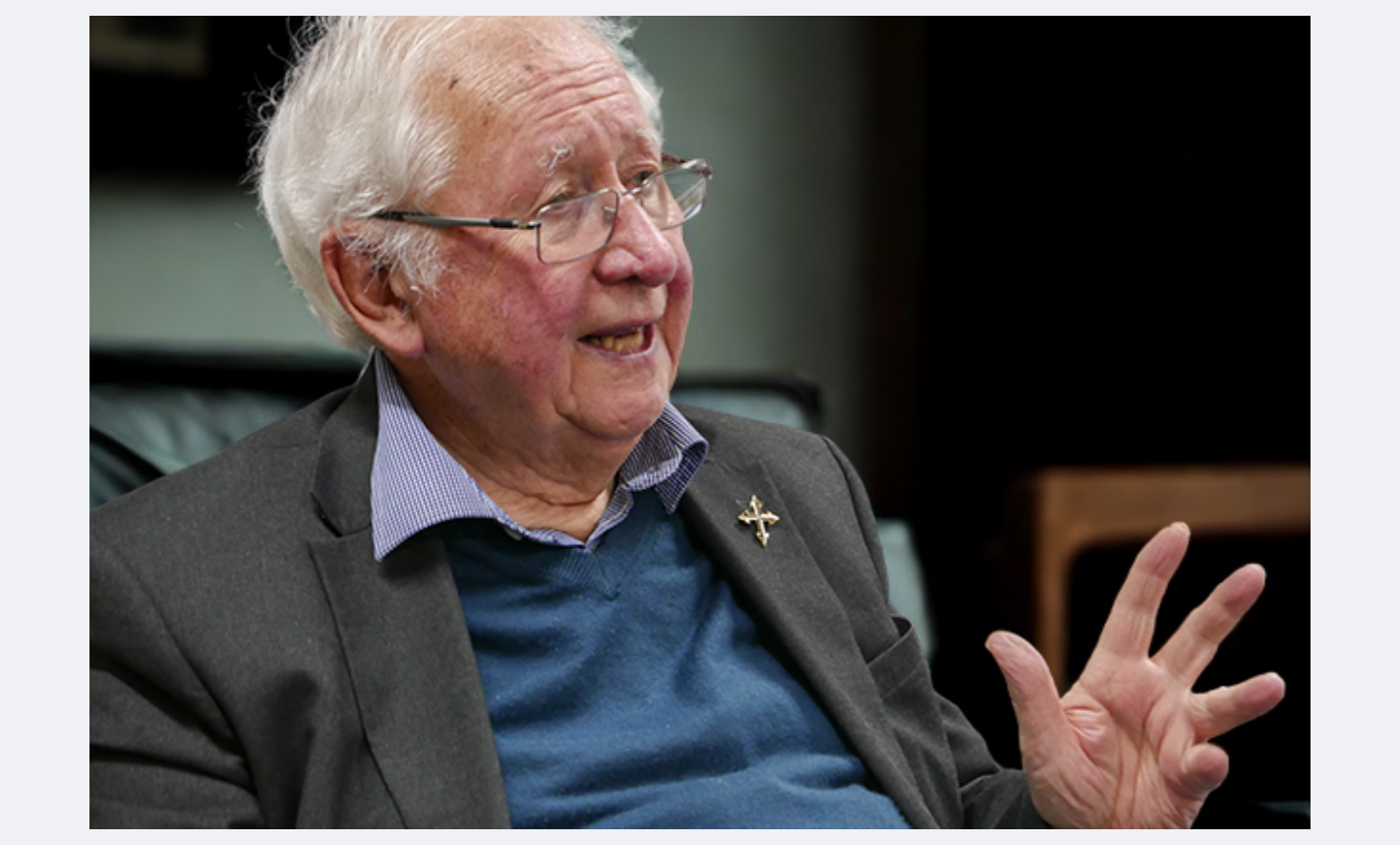
Patrick Doyle speaking on the subject of Dilexi Te in Hull
Patrick Doyle, a long-time parishioner at St Charles and an active member of the St Vincent de Paul Society, delivered a morning presentation on December 6 2025 at the Marist Social Centre on the theme Dilexi Te – a document initiative rooted in Catholic Social Teaching. He was accompanied by his wife, Janet, who assisted with readings and reflections. Although only a small number of parishioners attended, the session produced a thoughtful and unexpectedly lively discussion that lasted more than half an hour beyond its scheduled finish.
Patrick began by explaining the background of the previous formation framework, informally known as Dilex No., and how the new exhortation Dilexi Te (“I Have Loved You”) represents a renewed call from Pope Leo XIV for Christians to move from sentiment to concrete action. The document places strong emphasis on solidarity, the dignity of every person, and the Church’s responsibility to accompany the poor, the lonely, and the excluded.
A key part of the talk focused on migration—a central theme of Dilexi Te. Patrick highlighted Pope Leo’s reaffirmation of the now well-established pastoral principle that communities must welcome, protect, promote, and integrate those who arrive seeking safety and belonging. This fourfold framework was originally articulated by Pope Francis but is deliberately carried forward and deepened in Pope Leo’s writing.
From here, the group moved into a lively exchange about what “poverty” really means in today’s society. Patrick encouraged participants to recognise poverty in all its dimensions: financial insecurity, isolation, disrupted family structures, loss of purpose, and the quiet suffering of those who feel unseen. Parishioners responded with honest reflections about how easily such needs can be overlooked, and several commented that defining poverty must always lead to doing something about it, not merely describing it.
During the session, Patrick referred to a historical touchstone in Catholic social thought: Pope Leo XIII, whose foundational encyclical Rerum Novarum shaped the modern Church’s approach to justice, labour and social responsibility. Patrick cited Leo XIII’s conviction that “no one is a foreigner to our concern”, a line that resonated strongly with those present and linked neatly to Pope Leo XIV’s continuation of the same theme over a century later.
Patrick also drew attention to a timely local example of a Hull football initiative involving immigrants and local residents, which uses sport to build friendship, confidence and integration. For Patrick, this project embodies precisely what Dilexi Te urges—ordinary people taking simple steps that transform isolation into community.