Feast of the Chair of Saint Peter the Apostle
22 February
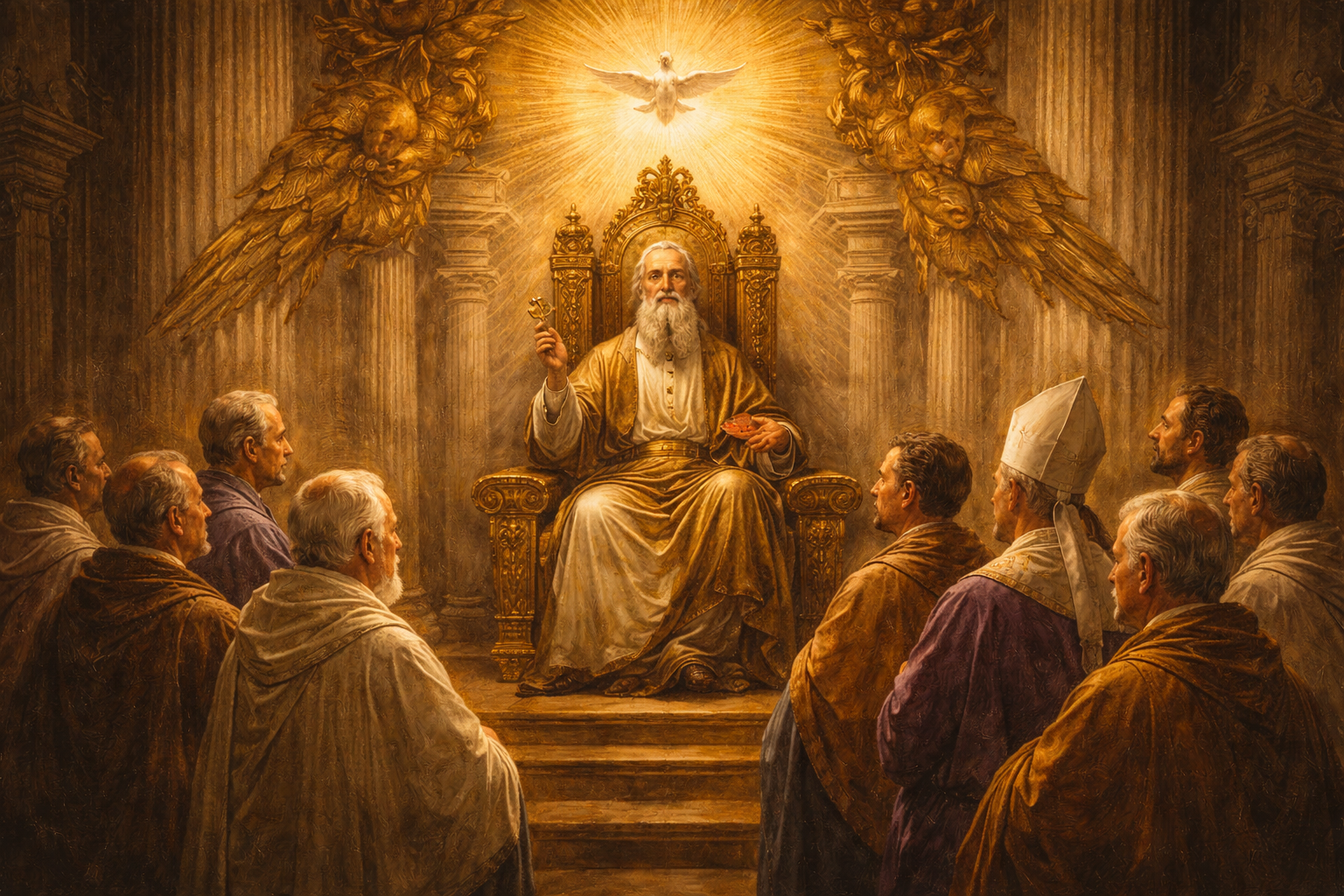
By Johannes
A lay Catholic voice reflecting within the life of the parish
Today’s feast places the Chair (Cathedra) of Saint Peter at the centre of the Church’s attention — not as a piece of furniture, but as a symbol of the specific mission entrusted by Christ to the Apostle Peter. The feast dates back to the third century and is distinct from the solemnity of Saints Peter and Paul celebrated on 29 June. It developed around the “cathedra” of Peter, understood as the place from which the Bishop taught, governed, and safeguarded the faith of the Christian community.
In the early Church, the cathedra was the fixed seat of the bishop in the principal church of the diocese — hence the word cathedral. It symbolised teaching authority and pastoral responsibility. As a successor of the Apostles, the bishop was called to guard the unity of the Church and faithfully transmit the Gospel. In this sense, the first “cathedral” can be seen in the Upper Room, where Jesus gathered the Apostles for the Last Supper and where, with Mary, they later received the Holy Spirit.
Peter’s ministry developed historically. He first exercised episcopal leadership in Antioch, where followers of Jesus were first called “Christians”. For this reason, the Church originally celebrated the Chair of Peter in Antioch on 22 February. Peter later came to Rome, where he bore witness to Christ through martyrdom. Because of this supreme act of fidelity, Rome came to be recognised as the principal See of Peter. Pope Saint John XXIII later united the earlier celebrations into a single feast, focusing attention on the enduring significance of Peter’s mission rather than its geographical stages.
At the heart of this feast is the Gospel scene at Caesarea Philippi, where Jesus asks his disciples a question that resounds through every age: “Who do you say that I am?” Peter’s response — “You are the Christ, the Son of the living God” — is not the result of human insight, but a gift of divine revelation. Jesus responds by entrusting Peter with a unique role: “You are Peter, and upon this rock I will build my Church.” This moment establishes Peter as the visible foundation of unity, entrusted with the keys of the Kingdom and the responsibility of binding and loosing in Christ’s name.
The Church Fathers recognised the enduring importance of this role. Saint Jerome wrote of his decision to remain in communion with the Chair of Peter, “for this I know is the rock upon which the Church is built.” Saint Augustine likewise affirmed that the Church venerates the Chair of Peter because it exists for the good of all the Churches, safeguarding faith and unity across time and place.
For today’s Church, this feast speaks with clarity and reassurance. In a world marked by division, uncertainty, and competing voices of authority, the Chair of Peter stands as a sign of unity and continuity. It reminds believers that the Church is not sustained by human strength alone, but by Christ himself, who remains at its helm. Though storms may arise, the promise remains: the gates of hell shall not prevail.
The Feast of the Chair of Saint Peter is therefore not about power, but about service, fidelity, and communion. It calls the Church to remain rooted in truth, united in faith, and confident that Christ continues to shepherd his people through the ministry of Peter and his successors, guiding the whole Church on the path of salvation.