Palm Sunday
29 March
By Johannes
A lay Catholic voice reflecting within the life of the parish
Palm Sunday of the Passion of the Lord
Palm Sunday marks the beginning of Holy Week, the most sacred period in the Christian liturgical year. On this day the Church commemorates Jesus’ triumphant entry into Jerusalem and at the same time reflects on the Passion of Christ, the suffering and sacrifice through which salvation was accomplished.
The celebration brings together two powerful moments in the Gospel story: the joyful welcome Jesus received as he entered Jerusalem and the solemn remembrance of the events that would soon lead to his crucifixion.
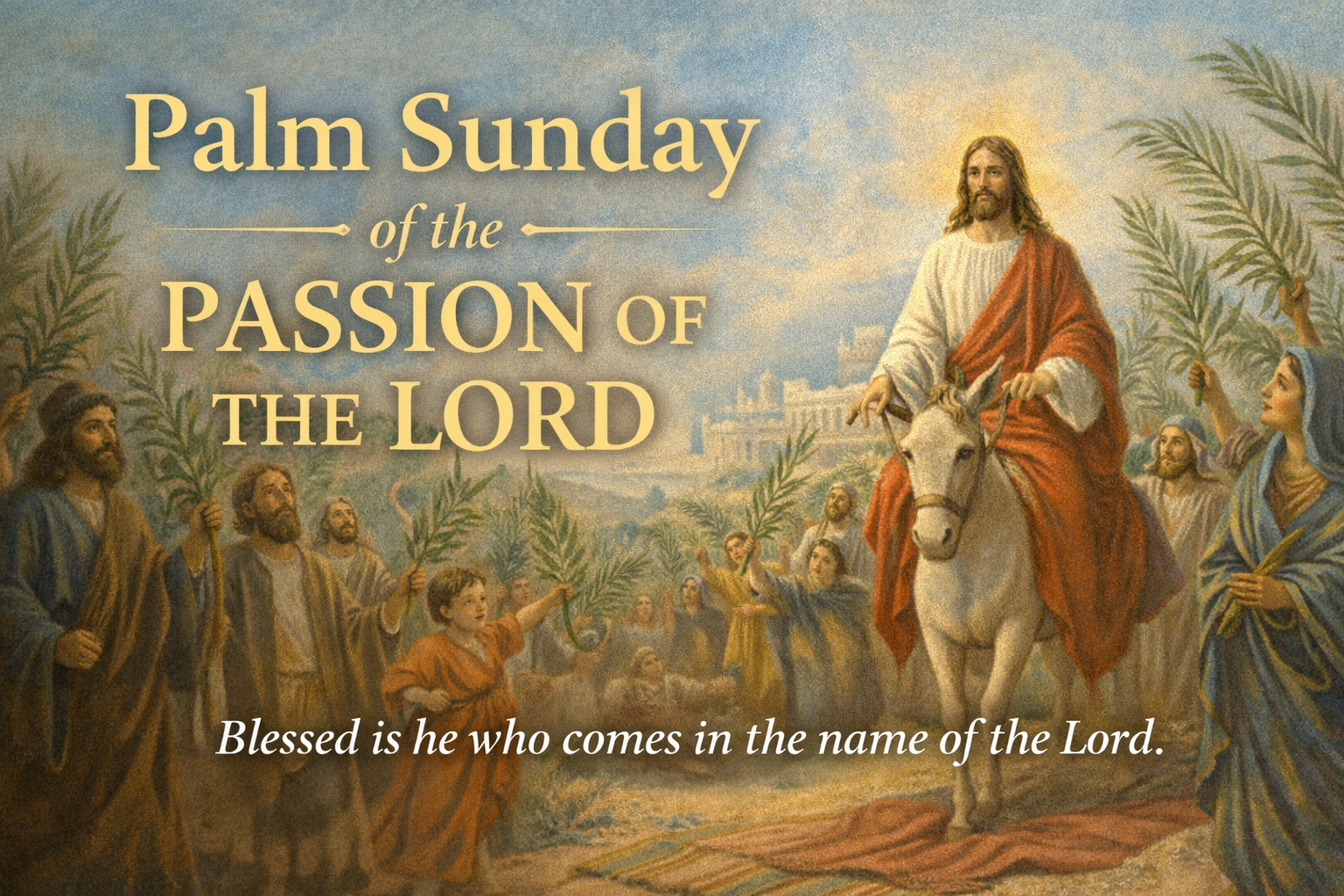
The account of Jesus’ entry into Jerusalem is recorded in all four Gospels (Matthew 21:1–11, Mark 11:1–10, Luke 19:28–40 and John 12:12–19). As Jesus approached the city, crowds gathered to welcome him. They spread cloaks on the road and waved palm branches, shouting words of praise:
“Hosanna! Blessed is he who comes in the name of the Lord.”
These gestures were signs of honour and recognition. Many in the crowd believed Jesus to be the long-awaited Messiah. Yet the Gospel narrative reminds us that within a few days the same city would witness his suffering and death.
The Procession of Palms
Palm Sunday begins with a special liturgy that recalls Christ’s entry into Jerusalem. Before Mass, the faithful gather for the blessing of palm branches and take part in a procession, remembering the crowds who welcomed Jesus with joy.
The palms carried by the faithful symbolise victory and triumph. They remind us that Christ entered Jerusalem willingly, knowing that his path would lead to the Cross. The procession expresses both joy and reverence, acknowledging Jesus as King while recognising that his kingship would be revealed through sacrifice.
After the liturgy, many people keep the blessed palms in their homes as a reminder of Christ’s victory and as a sign of faith. Traditionally these palms are later burned to produce the ashes used on Ash Wednesday of the following year.
The Reading of the Passion
During the Mass of Palm Sunday, the Church proclaims the Passion of the Lord in its entirety. Depending on the liturgical year, the Gospel account is taken from Matthew, Mark or Luke.
This solemn reading invites the faithful to enter deeply into the events that led to Christ’s crucifixion. The narrative recounts Jesus’ arrest, trial, suffering and death, reminding us of the immense love revealed through his sacrifice.
Palm Sunday therefore holds a unique place in the liturgy. It begins with joyful celebration but quickly turns toward reflection on the suffering that lies ahead.
The Meaning of Palm Sunday
Palm Sunday teaches an important lesson about the nature of Christ’s mission. The crowds expected a powerful earthly king who would restore political freedom. Instead, Jesus revealed a different kind of kingship — one rooted in humility, service and self-giving love.
Riding into Jerusalem on a donkey, a symbol of peace rather than war, Jesus showed that his kingdom would not be established through force but through the transforming power of God’s mercy.
The Cross, which seemed to represent defeat, would ultimately become the sign of victory over sin and death.
Beginning the Journey of Holy Week
Palm Sunday invites Christians to enter fully into the mysteries of Holy Week, which culminates in the celebration of the Paschal Triduum — Holy Thursday, Good Friday and the Easter Vigil.
During these sacred days the Church remembers the final events of Christ’s earthly life: the Last Supper, his Passion and death, and his Resurrection.
Palm Sunday therefore calls the faithful not only to remember these events but also to walk spiritually with Christ on the path that leads from the Cross to the empty tomb.
A Call to Faithful Discipleship
The story of Palm Sunday also invites personal reflection. The same crowds who welcomed Jesus with enthusiasm would later turn away from him. This reminds Christians of the importance of remaining faithful even in times of difficulty or uncertainty.
Palm Sunday challenges believers to recognise Christ as King not only in moments of joy but also in moments of suffering and sacrifice.
By following Jesus through the events of Holy Week, Christians prepare their hearts to celebrate the great joy of Easter, when the victory of Christ over sin and death is revealed.
A Prayerful Reflection
As we begin Holy Week, we are invited to accompany Christ on his journey to the Cross and to renew our commitment to follow him faithfully.
Lord Jesus,
as we welcome you with palms and praise,
help us to follow you with faith and courage.
May we walk with you through the trials of Holy Week
so that we may share fully in the joy of your Resurrection.