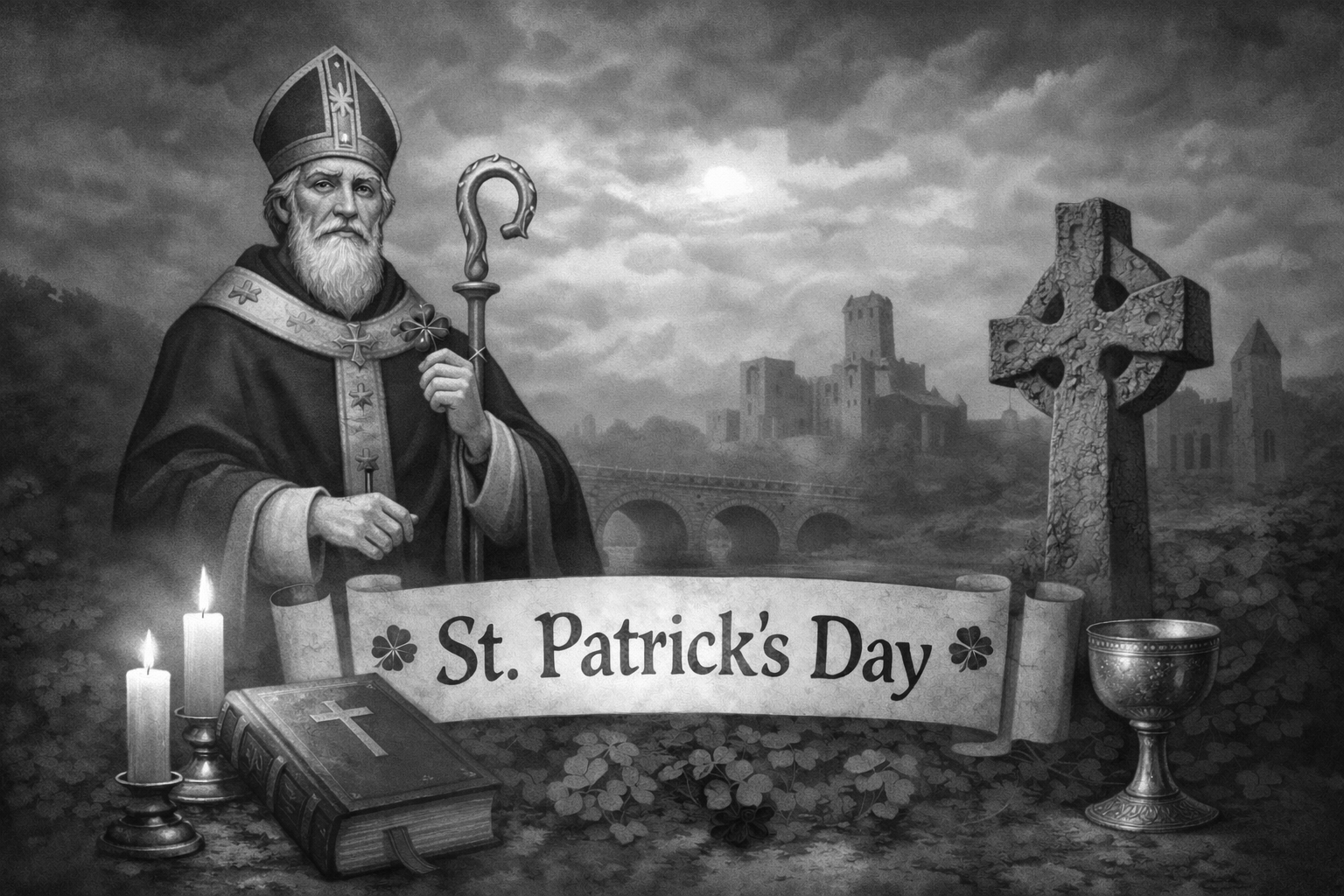
Saint Patrick’s Day
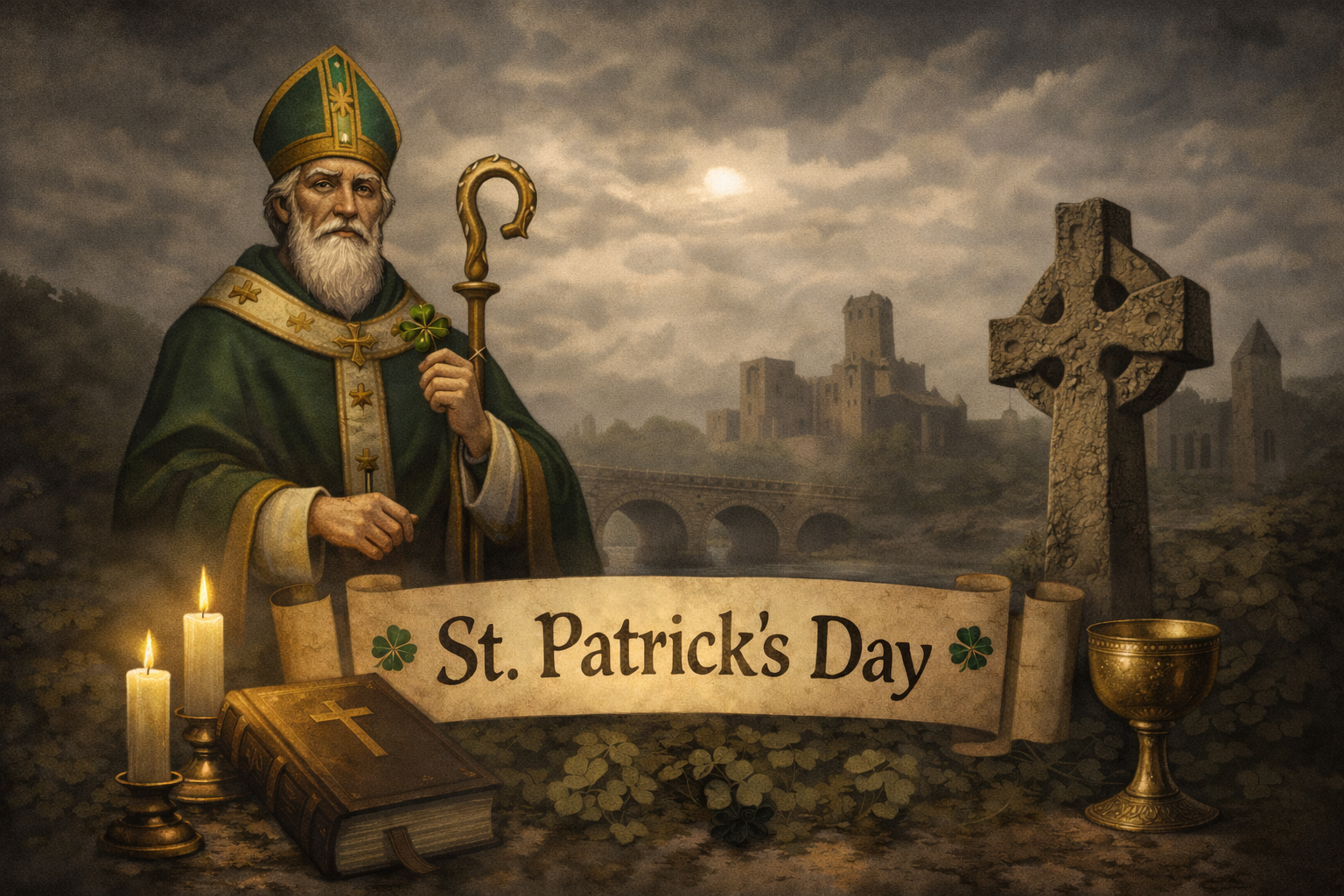
St Patrick’s Day, celebrated each year on 17 March, honours Saint Patrick, the missionary bishop credited with bringing Christianity to Ireland in the fifth century. While it is most strongly associated with Ireland, the day has long been observed across the United Kingdom because of the deep historical, cultural and religious connections between the two islands.
In the Catholic tradition, the day is primarily a liturgical feast. Churches throughout the UK often celebrate Mass in honour of St Patrick, giving thanks for his missionary work and the spread of the Christian faith in Ireland. In parishes with Irish heritage or Irish clergy, the feast may be marked with particular warmth. The liturgy recalls Patrick’s courage and perseverance, especially his work evangelising Ireland after having previously been enslaved there as a young man.
St Patrick’s Day has an important place within the Catholic calendars of England, Wales and Scotland, though it is celebrated with different levels of solemnity. In Ireland it is a Solemnity, one of the highest ranks in the Church’s calendar. In other countries it is typically observed as a Feast or Memorial, depending on the local liturgical calendar. When it falls during Lent, as it often does, the celebration provides a moment of joy within the otherwise more penitential season.
Beyond the liturgical celebration, St Patrick’s Day has also become a wider cultural event across the UK. Large Irish communities settled in British cities during the nineteenth and twentieth centuries, especially in places such as Liverpool, Manchester, Glasgow, Birmingham and London. As a result, the day is marked with parades, music, dancing and cultural gatherings that celebrate Irish heritage.
In many cities, Irish cultural organisations organise parades featuring traditional Irish music, marching bands and community groups. Green clothing, shamrocks and Irish flags are common sights. Public buildings are sometimes illuminated in green as part of the global “Greening” tradition associated with the day. Irish pubs and cultural centres often host traditional music sessions, storytelling and gatherings of the local Irish diaspora.
The day also has a broader symbolic meaning. St Patrick is remembered not only as a missionary but also as a figure of reconciliation and perseverance. His own life story—being captured by Irish raiders as a youth, escaping, and later returning voluntarily as a missionary—has long been seen as an example of forgiveness and dedication to faith.
In the UK today, St Patrick’s Day therefore carries both religious and cultural significance. For Catholics and many other Christians it remains a feast honouring a great missionary saint. For others it is an opportunity to celebrate Irish history, music, language and identity within the wider fabric of British society.
Although the celebrations can sometimes appear festive and secular, their roots lie in the story of a man whose faith shaped the spiritual history of Ireland and influenced Christianity throughout the British Isles. In that sense, St Patrick’s Day continues to remind people in the United Kingdom of the shared religious heritage linking Ireland and Britain across centuries.