Solemnity of the Annunciation of the Lord
25 March
By Johannes
A lay Catholic voice reflecting within the life of the parish
Solemnity of the Annunciation of the Lord
25 March
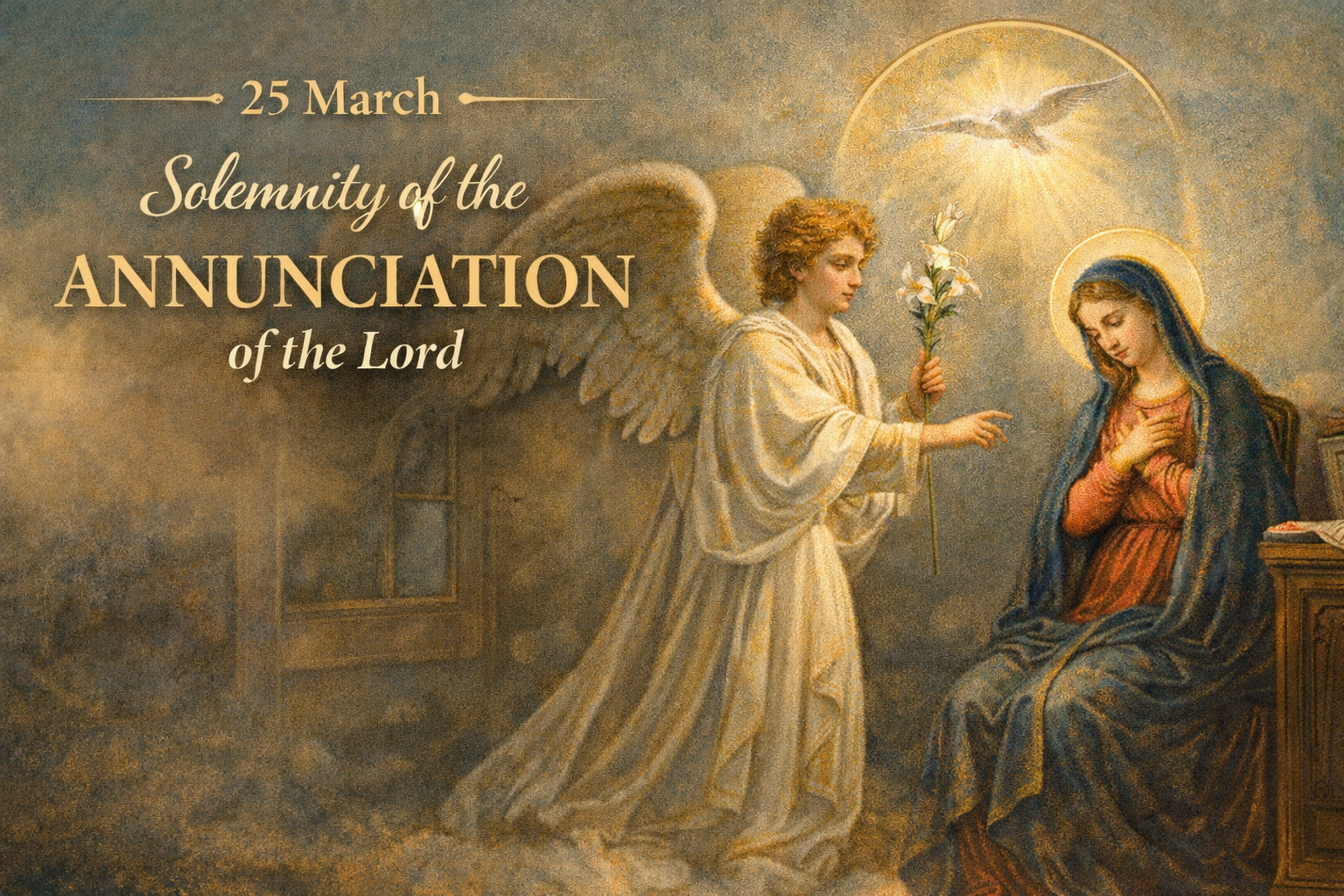
Each year on 25 March the Catholic Church celebrates the Solemnity of the Annunciation of the Lord, one of the most profound mysteries in the Christian faith. The feast commemorates the moment when the Angel Gabriel announced to the Virgin Mary that she would conceive and bear the Son of God, and when Mary freely gave her consent to God’s plan for the salvation of the world.
The Annunciation marks the beginning of the Incarnation, the moment when the eternal Word of God took flesh in the womb of the Virgin Mary. As the Gospel of Saint John proclaims: “The Word became flesh and dwelt among us” (John 1:14). For this reason, the Annunciation is not only a Marian feast but also a celebration of the mystery of Christ becoming man.
The event is recorded in the Gospel of Saint Luke (Luke 1:26–38). Six months after the conception of John the Baptist, the angel Gabriel was sent by God to the town of Nazareth in Galilee. He greeted Mary with the words: “Hail, full of grace, the Lord is with you.” Gabriel announced that she would conceive by the power of the Holy Spirit and give birth to a son who would be called Jesus, the Son of the Most High.
Mary’s response reveals both humility and faith. Though troubled by the greeting, she listened attentively to the angel’s message. When she asked how this could be, since she had no husband, Gabriel explained that the Holy Spirit would come upon her and the power of the Most High would overshadow her.
Mary then gave her complete and faithful consent with the words that have echoed throughout Christian history:
“Behold, I am the handmaid of the Lord. Let it be done to me according to your word.”
With this act of trust and obedience, Mary cooperated freely in God’s plan of salvation. At that very moment, through the power of the Holy Spirit, Jesus Christ was conceived in her womb.
The Mystery of the Incarnation
The Annunciation celebrates the mystery of the Incarnation, when the Son of God took on human nature while remaining fully divine. The Church teaches that Jesus Christ is true God and true man, united in one divine person.
This mystery stands at the very centre of Christian faith. Through the Incarnation, God entered human history not as a distant observer but as one who shares fully in our humanity. In Jesus Christ, God comes close to us, revealing His love and opening the way to salvation.
For this reason, the Annunciation is celebrated as a solemnity, the highest rank of feast in the Church’s liturgical calendar. The Creed recited at Mass on this day includes a profound moment of reverence: when the words “and by the Holy Spirit was incarnate of the Virgin Mary, and became man” are spoken, the faithful bow in honour of this sacred mystery.
Mary’s “Yes” to God
At the heart of the Annunciation is Mary’s faithful response to God’s invitation. Her “yes”, often referred to by the Latin word fiat (“let it be done to me”), represents a moment of complete trust in God.
Mary did not fully know what the future would hold. She could not foresee the joys and sorrows that would accompany her vocation. Yet she placed herself entirely in God’s hands.
Because of her obedience, Mary became the Mother of God, bearing the one who would bring redemption to the world. The Church honours her as the New Eve, whose faithful obedience contrasts with the disobedience of the first Eve. Where sin had once entered the world through disobedience, salvation now begins through faithful acceptance of God’s will.
A Feast During Lent
The Solemnity of the Annunciation usually falls during the season of Lent, a time of reflection and preparation for Easter. Even within this penitential season, the Church celebrates the Annunciation with joy, because it marks the beginning of the saving work of Christ.
The liturgical colour for the feast is white, symbolising joy, purity and the glory of God’s plan for humanity.
The date of 25 March holds deep symbolic meaning. It falls exactly nine months before Christmas, marking the beginning of Christ’s earthly life before His birth in Bethlehem.
The Annunciation and the Modern World
The message of the Annunciation continues to speak powerfully to Christians today. Mary’s response to God reminds us that faith often begins with trust, even when we cannot fully understand where God is leading us.
Her example teaches that God often works through humility, openness and willingness to serve. Mary was not a person of worldly power or influence, yet through her faithful response she became central to the story of salvation.
In a world often marked by uncertainty, anxiety and rapid change, the Annunciation reminds us that God continues to act in human history. Like Mary, Christians are invited to listen to God’s call and to respond with generosity and faith.
A Prayerful Reflection
The mystery of the Annunciation is recalled daily in the prayer of the Angelus, traditionally prayed morning, noon and evening. This prayer reminds the faithful of the moment when the Word became flesh and invites us to renew our trust in God’s plan.
As we celebrate the Solemnity of the Annunciation, the Church invites us to reflect on Mary’s words and make them our own:
“Let it be done to me according to your word.”
Through her faithful “yes”, God’s promise of salvation began to unfold in the world. The Annunciation reminds us that God’s grace continues to work through those who trust in Him and are willing to follow His will.
The Annunciation and the Life of the Church
The Annunciation reminds the Church that God’s saving work begins with a humble and faithful response. Mary’s “yes” allowed the Word to become flesh and enter human history. In every generation Christians are invited to echo that same response — trusting in God’s plan and allowing His grace to work through their lives for the good of the world.