Parish News Archive February 2026
February 2026
Visit by Emma Hardy MP for West Hull & Haltemprice
Minister of State
(Department for Environment, Food and Rural Affairs)


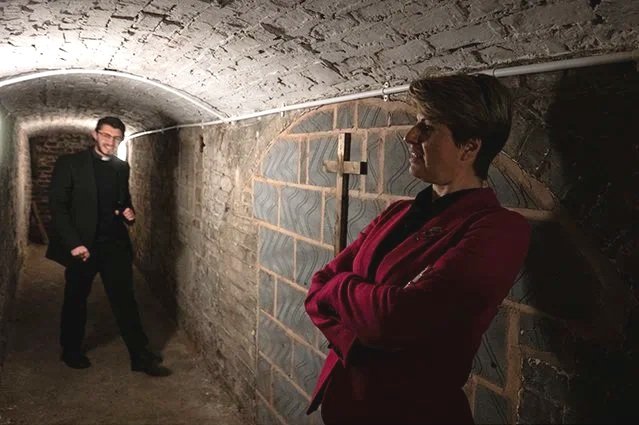
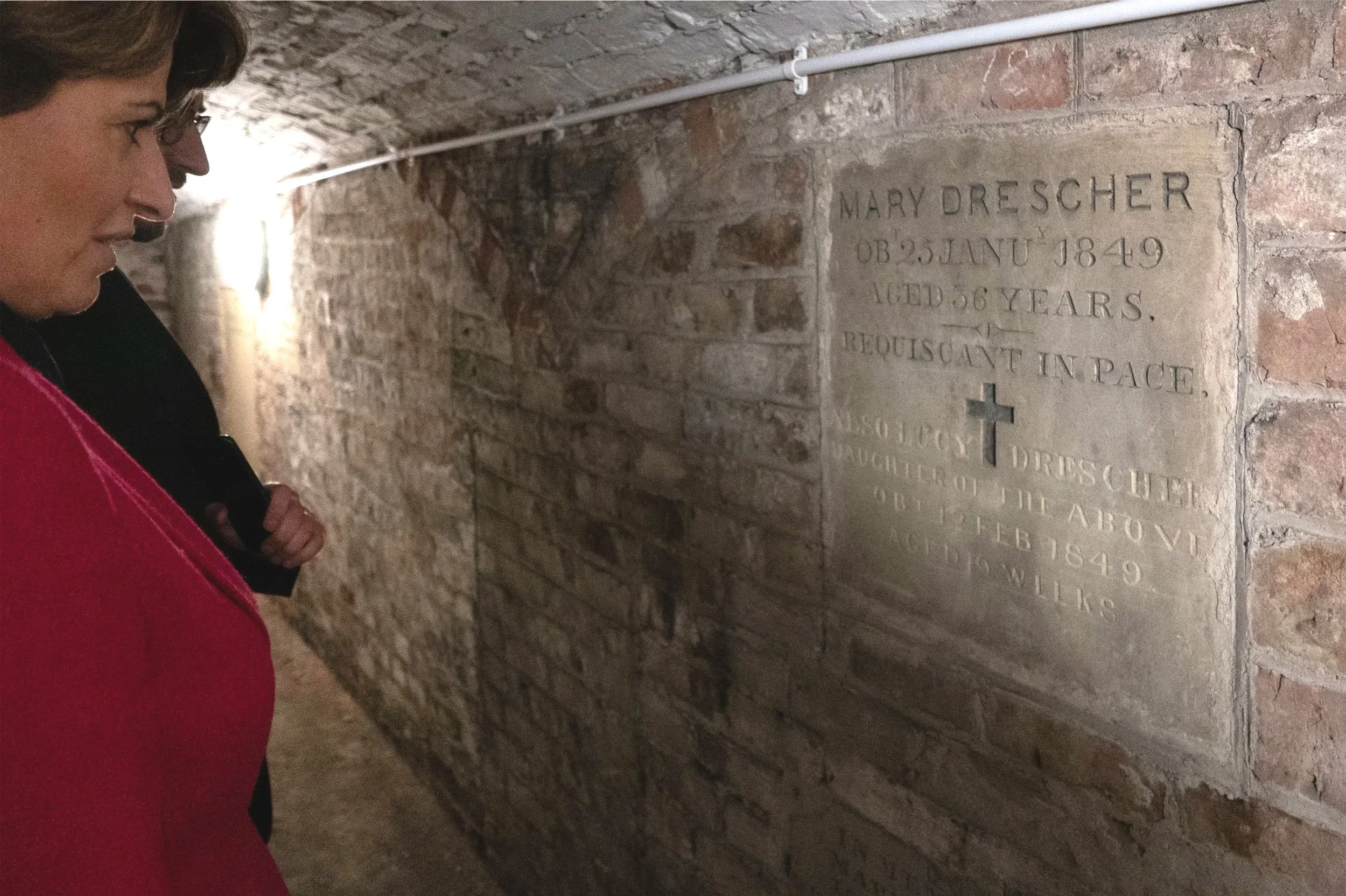
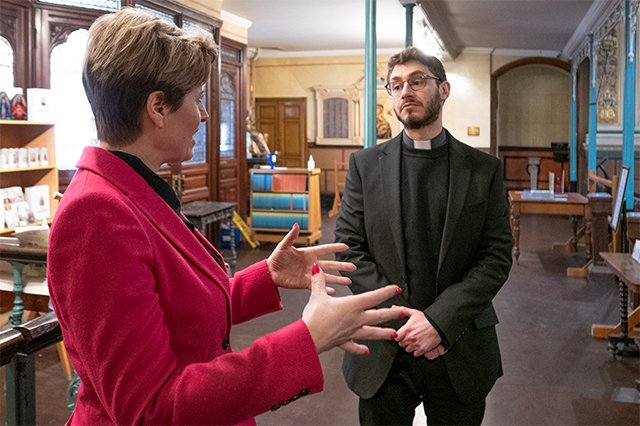

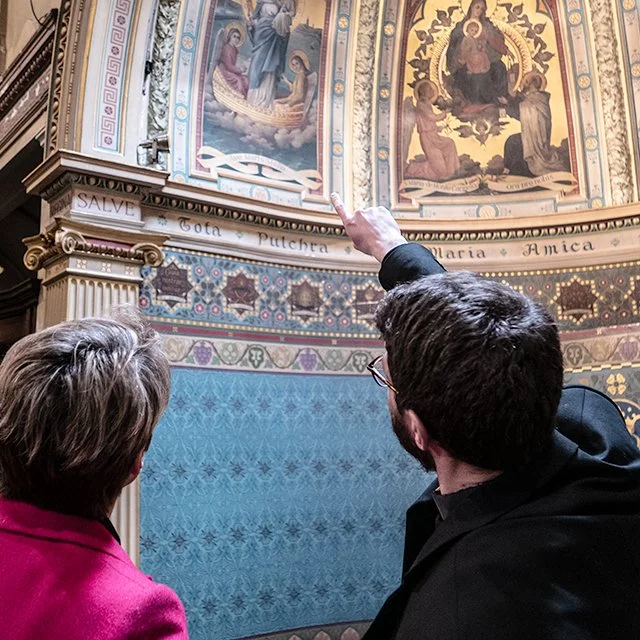
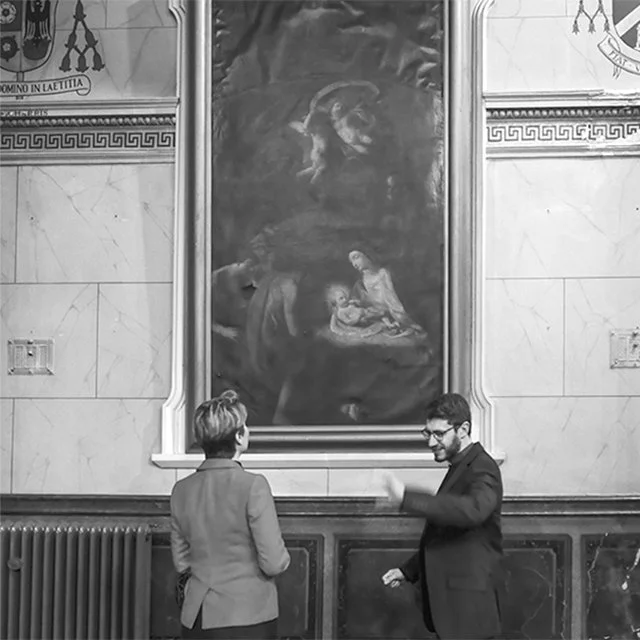
St Charles Borromeo Church was honoured to welcome Emma Hardy MP, Minister of State at the Department for Environment, Food and Rural Affairs and Member of Parliament for Kingston upon Hull West and Haltemprice, for an official constituency visit on Friday 27 February at 1:00pm.
The 35-minute visit was marked by warmth, attentiveness and genuine engagement. Arriving promptly and with a friendly, open manner, Ms Hardy was received by Fr Phil, who guided her through the church while introducing its rich history, architecture and devotional heritage.
Throughout the tour, the Minister showed clear interest in the story of St Charles — not simply as a historic building, but as a living part of Hull’s identity. As a former secondary school teacher, she brought thoughtful curiosity to the visit, asking informed questions about the church’s origins, artwork and role within the city. At several points she appeared visibly fascinated by the architectural detail and the narrative embodied in the church’s stained glass, memorials and sacred art.
During the visit, Ms Hardy was shown one of the church’s notable nineteenth-century artworks — a large Nativity painting that forms part of the parish’s early story.
The painting bears a small area of historic damage to the canvas, a feature long observed by parishioners and visitors alike. Fr Phil explained that the artwork is traditionally associated with the earliest period of Catholic presence in Hull, following the arrival of the French émigré priest Abbé Foucher in 1798 and the establishment of a chapel in North Street soon afterwards.
According to longstanding parish tradition, the painting was concealed beneath straw in Foucher’s cart as it entered the town and may have been damaged during inspection at the city gates. While the precise details are not formally documented in surviving archives, the visible mark has become part of the parish’s shared memory of its beginnings.
Today the artwork serves as an evocative reminder of the church’s formative years and the quiet determination of a community re-establishing public worship in a changing social climate.
For the visiting MP, the painting offered an opportunity to reflect on the depth of Hull’s religious and cultural heritage. Beyond its artistic value, it represents continuity — a link between the city’s late eighteenth-century Catholic revival and the present-day parish community.
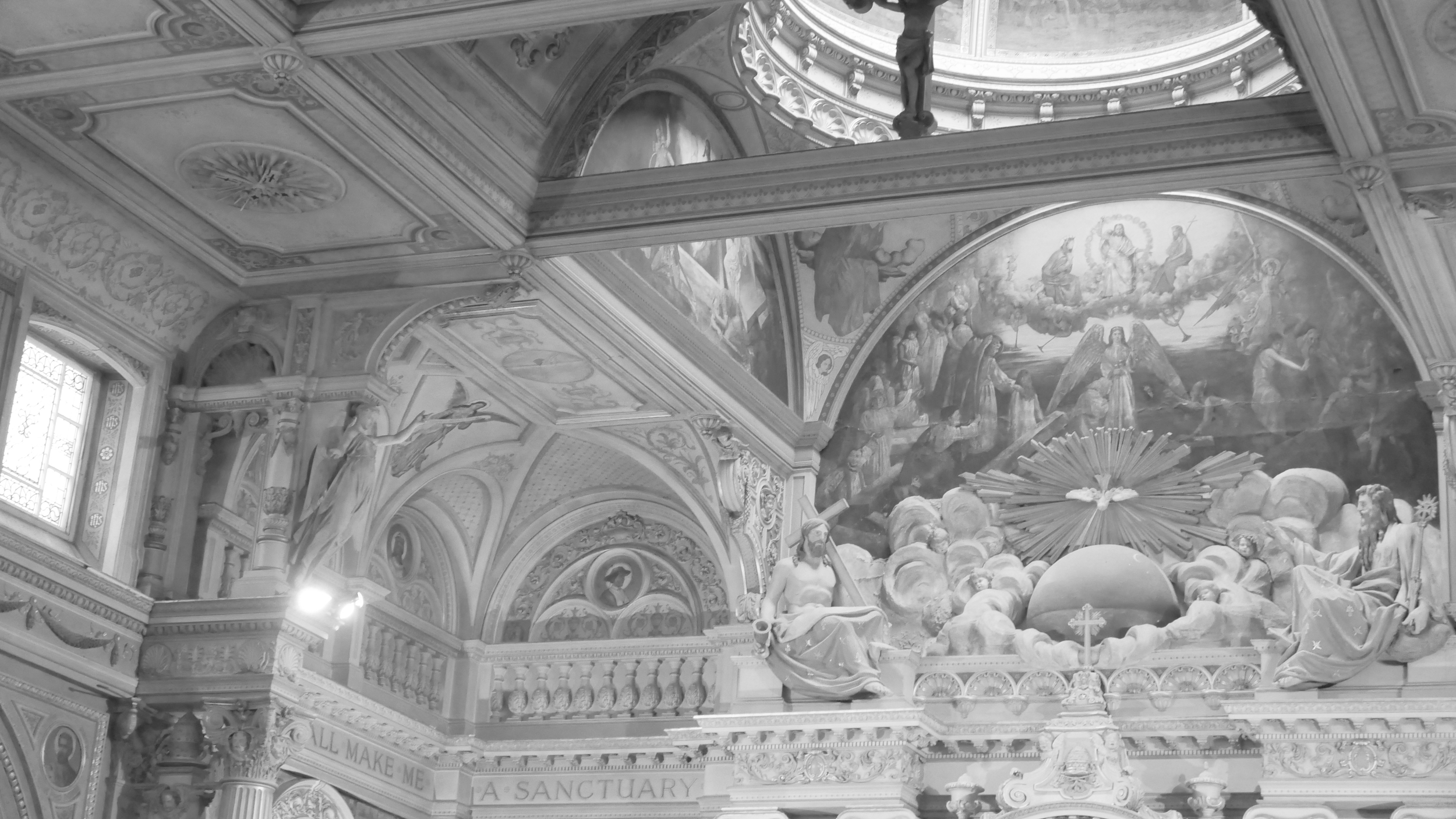
Emma Hardy MP was also invited to look closely at the richly decorated sanctuary and the Marian panels above the inscription band reading “Salve… Tota Pulchra Maria…” — “Hail… wholly beautiful Mary.”
Fr Phil explained that this part of the church carries a particular resonance for Hull. As a historic port city, Hull’s identity has long been shaped by the sea. For generations, families from West Hull — once a major fishing centre — depended directly on maritime trade and the fishing fleets for their livelihoods, often living with the daily uncertainty that came with life at sea.
Within that context, Marian devotion took on a deeply local meaning. Across coastal communities the Virgin Mary has long been honoured under the title Stella Maris — Star of the Sea — a guiding light for sailors navigating dangerous waters. Although the title is not written explicitly in the sanctuary inscription, the imagery and emphasis on Mary reflect that same tradition of protection, guidance and hope.
Fr Phil noted that for nineteenth-century parishioners — dock workers, fishermen and their families — the church was not only a place of worship but also a place of prayer for safe voyages and safe returns. The decorative scheme above the sanctuary, with its gold tones and celestial imagery, would have reinforced the sense of divine guidance and watchful care.
For the MP, whose constituency includes areas shaped by Hull’s fishing heritage, the symbolism remains relevant. The sanctuary artwork speaks of continuity, linking faith, labour and local identity across generations.
Discussion also focused on the potential of St Charles within Hull’s wider tourism offer. Situated close to the city centre, the church forms part of Hull’s architectural and cultural landscape, yet its heritage value is not always fully recognised in civic promotion. Fr Phil and the MP explored how sacred heritage sites can contribute meaningfully to the city’s visitor experience, adding depth, beauty and historical continuity to Hull’s story.
Alongside this vision came practical considerations. Like many historic buildings, St Charles requires ongoing renovation and maintenance to preserve its historic fabric. The parish is actively seeking funding to safeguard the structure for future generations. Ms Hardy listened carefully to these concerns and indicated she would explore possible funding streams and avenues of support that may assist the parish in its restoration work.
The conversation also touched on the wider contribution of faith communities in strengthening local life. The Minister and Fr Phil discussed how churches help forge community bonds, offer stability and provide support in times of need. In an era marked by social and economic challenges, such local institutions continue to play a vital role in promoting wellbeing and cohesion.
Commenting on her visit, Emma Hardy MP reflected on the church’s significance and its future potential:
“There’s a bicentenary coming up and the church is hoping to open its doors as a more welcoming community space. They’re really eager for people to come along, explore the building and see just how much history it holds.
“It’s a truly beautiful place with so much character, and it’s a wonderful setting for bringing people together. If you get the chance to pop in, I’d definitely recommend it — you might be surprised how much there is to discover. I know I certainly was.”
The visit concluded on a positive and forward-looking note. While brief in duration, the meeting strengthened relationships and opened constructive channels for further dialogue. The parish expresses sincere gratitude to Emma Hardy MP for her time, attentiveness and willingness to support both the heritage and mission of St Charles Borromeo Church.
Presbytery Renovations Commence at St Charles
February 2026
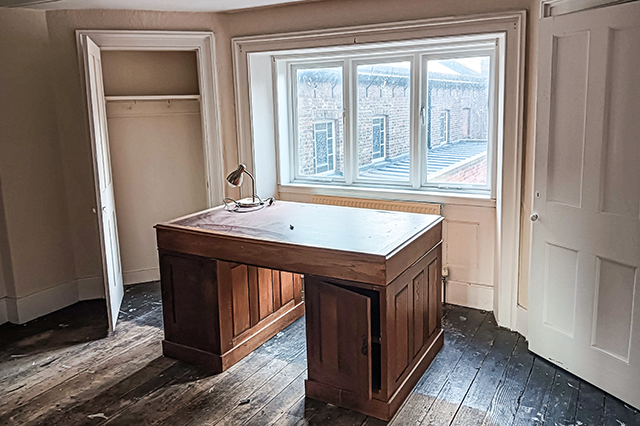
Significant renovation work is now underway at the Presbytery of St Charles Borromeo in Hull, marking an important step forward in strengthening parish life and hospitality.
The project has been masterminded by Fr Phil in collaboration with parishioner Micki Coyle, a retired architect, working closely alongside the Diocesan Building Manager. Together, they have developed plans to modernise and adapt the Presbytery so that it better serves both the clergy and the wider parish community.
The renovation will include refreshed and properly configured priest’s quarters, into which Fr Phil will be moving once the works are completed. The aim is to ensure that the accommodation is practical, welcoming and suitable for the long-term needs of the parish priest.
However, the project is not simply about residential improvements.
A key element of the redesign is the provision of a dedicated space where parishioners can meet. This will allow for pastoral conversations, informal gatherings and small meetings to take place in a setting that is both comfortable and appropriately separate from the private living quarters.
When asked about the development, Fr Phil said:
“I am most excited at the provision of a space for parishioners to meet.”
His comment reflects the pastoral heart behind the renovation — a desire to ensure that the Presbytery functions not only as a residence, but also as a place of welcome and accessibility.
Micki Coyle has been generously giving a considerable amount of his time to manage and oversee the project. Drawing on his professional experience as an architect, he has helped guide the planning and practical stages of the renovation, liaising with contractors and supporting the coordination of works.
As the project progresses, Micki will be posting before-and-after images so that parishioners can see the transformation taking place. These updates will provide a visual record of the improvements and allow the parish community to follow developments step by step.
The collaboration between Fr Phil, Micki and the Diocese demonstrates a shared commitment to careful stewardship of parish buildings. The Presbytery is not only a residence but an integral part of parish life, and its renewal reflects a forward-looking approach to how space can best serve mission and ministry.
Further updates will be shared as work continues, with the hope that the renewed Presbytery will soon offer both a suitable home for the parish priest and a welcoming environment for parishioners to gather.