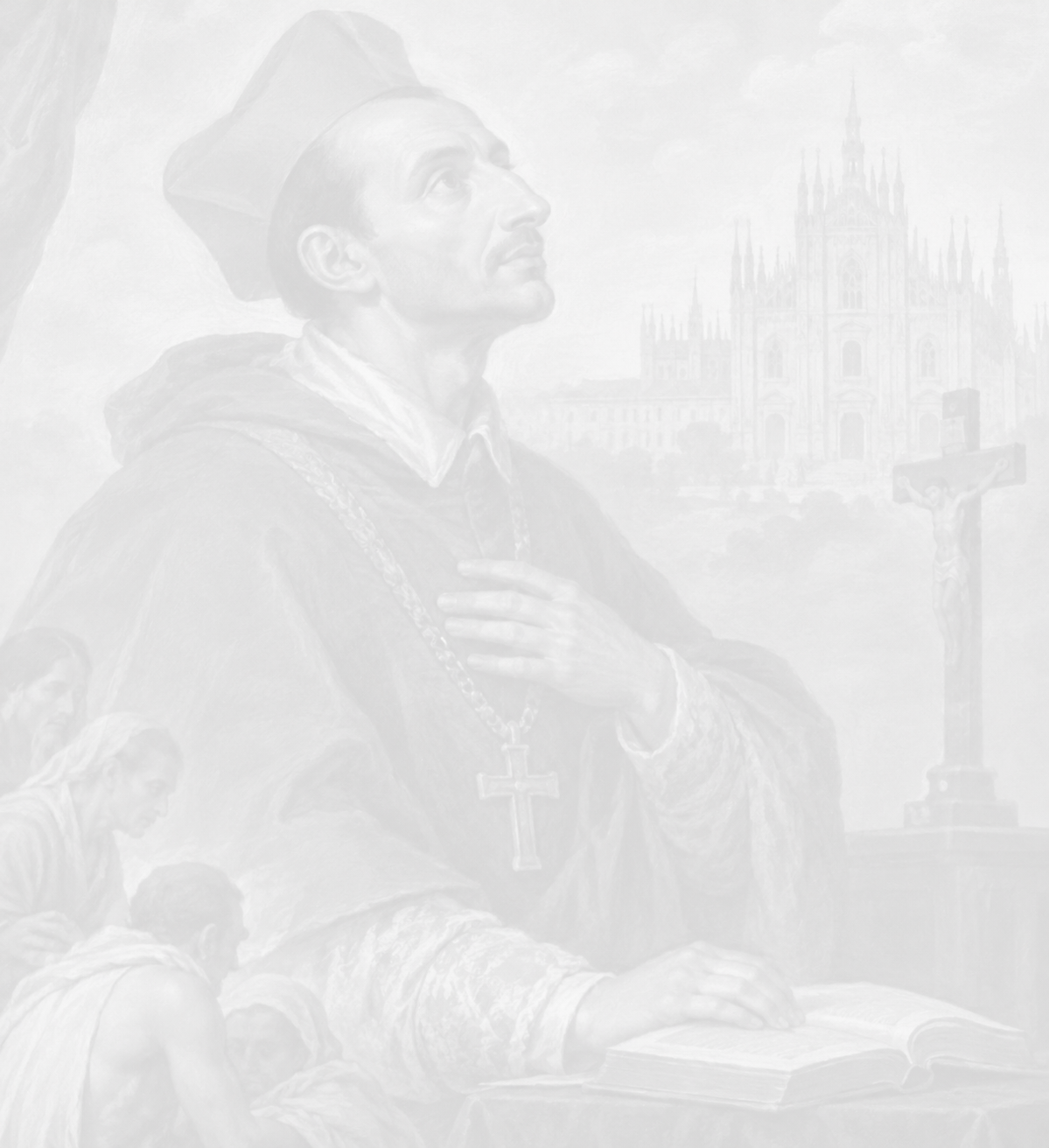
Solemnity of Saint Charles Borromeo
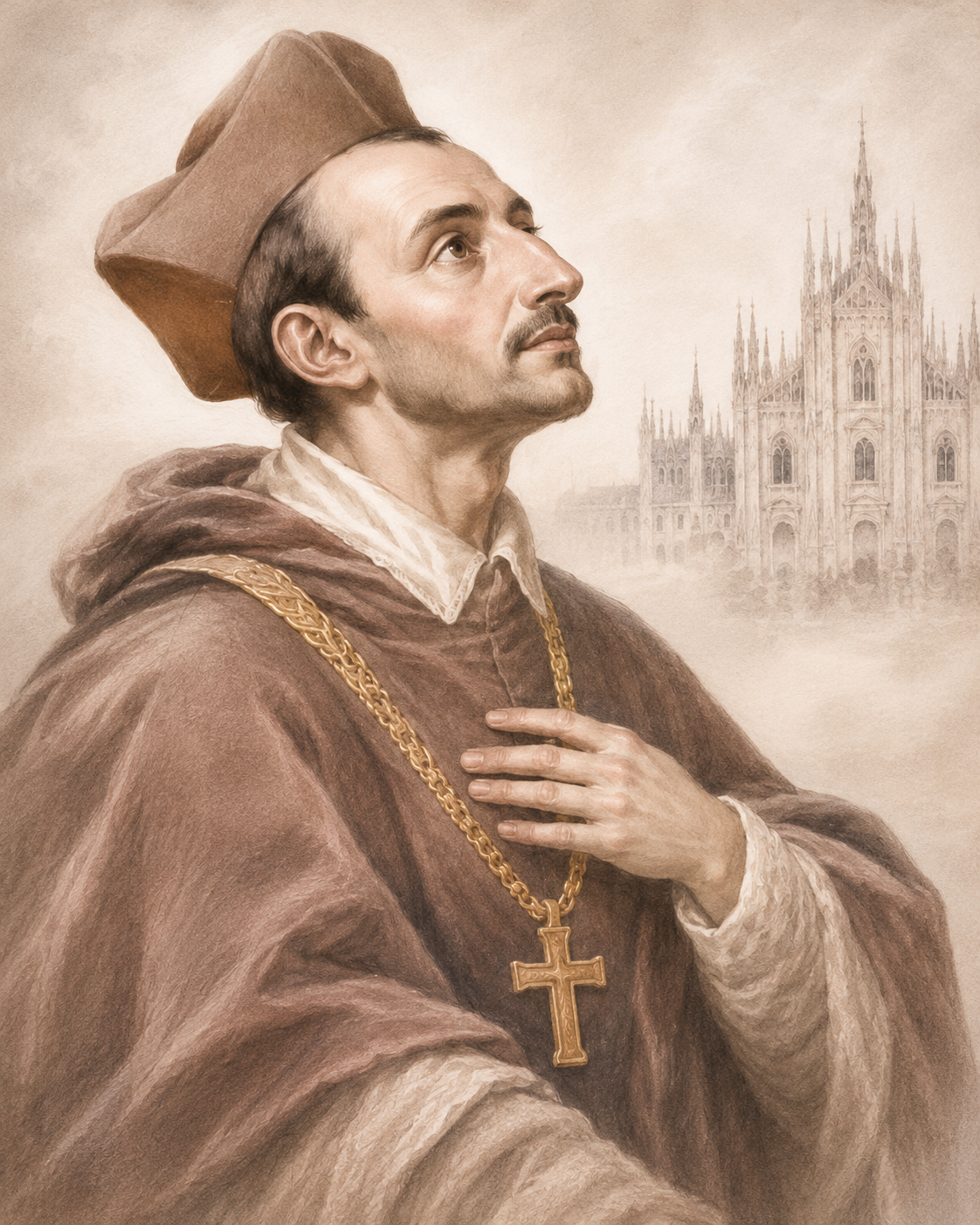
The Saint Behind the Name: St Charles Borromeo and the Story of Hull’s Catholic Faith
An Italian archbishop, a city devastated by plague, and a small community of determined Catholics in Hull. As we celebrate the feast of our patron saint on 4 November, how did their remarkable stories came together.
Walk along Jarratt Street in Hull and you might easily pass St Charles Borromeo Church without appreciating what lies behind its rather dignified exterior.
Step inside, however, and dignity gives way to something approaching heavenly extravagance. There are gilded columns, painted ceilings, marble, angels and enough magnificent decoration to make even the most enthusiastic interior designer sit down for a moment.
But the real story of St Charles is not about gold leaf or architecture. It concerns a man who lived more than four centuries ago, an Italian archbishop who devoted his life to the poor, challenged the powerful and walked among people dying of plague.
And, rather unexpectedly, his name would eventually find a permanent home in Hull.
A young man with powerful connections
Charles Borromeo was born on 2 October 1538 into a wealthy and influential family at Arona, beside Lake Maggiore in northern Italy.
His uncle became Pope Pius IV, and Charles soon found himself occupying important positions in Rome. He was appointed a cardinal at just 22, before he had even been ordained a priest. It was an extraordinary promotion, although having an uncle who happened to be Pope probably did his career prospects no harm.
Yet Charles was not content to enjoy privilege and influence.
The Church of his time was struggling with corruption, religious division and the upheaval of the Protestant Reformation. Some clergy were poorly educated, bishops neglected their dioceses and ordinary Catholics often received inadequate spiritual care. Charles became one of the leading figures in the Catholic renewal associated with the Council of Trent.
Ordained a priest in 1563 and subsequently Archbishop of Milan, he believed that genuine reform must begin with those entrusted with leadership. He established seminaries to educate priests properly, insisted that bishops live among their people, visited parishes, encouraged religious instruction and worked tirelessly to improve pastoral care.
His guiding word was Humilitas, meaning humility. For a man surrounded by titles, wealth and power, it was a demanding choice.
When the plague came to Milan
Perhaps the greatest test of Charles's faith came in 1576, when plague swept through Milan. Fear spread through the city. Many people with the means to leave sought safety elsewhere, while the sick, poor and vulnerable remained behind. Charles stayed with them. He organised assistance, visited the sick, comforted the dying and committed his personal wealth to relief efforts.
Imagine the streets of Milan, with frightened families behind closed doors and the terrible uncertainty of an epidemic. Into that suffering walked their archbishop, not merely issuing instructions but offering the presence of a fellow human being. His example brings to mind Christ's words in Matthew's Gospel: "I was sick and you visited me" (Matthew 25:36).
Charles understood that Christianity could never be reduced to ceremonies, buildings or regulations, however necessary these might be. Faith had to become visible in acts of love. He died on 3 November 1584, aged only 46, exhausted by years of service. He was canonised in 1610, and his feast is celebrated on 4 November.
Meanwhile, in a very different city...
To understand how his name reached Hull, we must travel forward almost two centuries. Catholics in eighteenth-century England still lived with the consequences of the Reformation. Their religious freedom was restricted, and anti-Catholic prejudice could be fierce. In Hull, a small Catholic community struggled to maintain its faith.
Around 1774, Fr Charles Howard came to minister to local Catholics. A chapel was eventually established in Posterngate in 1779. It did not survive long. In 1780, during the anti-Catholic Gordon Riots, the chapel was destroyed. One can only imagine the distress of those families who had finally obtained somewhere to worship, only to see it lost to violence.
Yet the community did not disappear. Catholics continued meeting for Mass in private premises, quietly preserving their faith. In 1798, a French priest, Fr Pierre Foucher, arrived in Hull after fleeing the French Revolution. Having escaped religious and political upheaval in his homeland, he helped establish a more secure place of Catholic worship in his adopted city. Using his own resources, he financed a chapel in North Street, opened in 1799.
The Catholic community had found its feet again.
How St Charles came to Jarratt Street
The early Catholic mission had been associated with the names Saints Peter and Anne, and later St Augustine. The decisive change came with Fr John Smith, who succeeded Fr Foucher and secured land in Jarratt Street for a substantial new church. Designed by Hull architect John Earle, its foundation stone was laid in 1828, and the church opened on 29 July 1829.
That was a momentous year. The Roman Catholic Relief Act, commonly associated with Catholic Emancipation, had removed many of the remaining legal restrictions on Catholics. After generations of uncertainty, Catholics could look towards the future with greater confidence.
The new church was dedicated to St Charles Borromeo.
Why the founders chose St Charles Borromeo as patron is not made explicit in the surviving accounts consulted. Yet the choice was remarkably fitting. Here was a bishop who had devoted his life to rebuilding the Church, strengthening its priests and caring for the poor. In Hull, Catholics who had endured years of hostility and the destruction of their earlier chapel were establishing a permanent and visible place of worship. Across more than two centuries, the same saint's name would come to represent their faith, perseverance and renewed confidence.
A hidden treasure in Hull
The original building did not remain unchanged. It was widened in 1835 under the architect J. J. Scoles and transformed more dramatically in 1894 by the Hull architectural firm Smith, Brodrick and Lowther.
Its extraordinary interior owes much to Heinrich Immenkamp, an Austrian craftsman living in Hull. Look carefully around the church and you will find reminders of its patron, including scenes from his life depicted on the altar. The statues outside include St Charles himself and St Margaret Clitherow, Yorkshire's own courageous Catholic martyr. Above the sanctuary is the magnificent representation of the Last Judgement, a reminder that earthly splendour is only a glimpse of something greater.
In 2016, Historic England recognised the church's exceptional importance by upgrading it to Grade I listed status. Yet the finest achievement of St Charles is not its decoration. It is that the building remains a living place of faith. For nearly two centuries it has been regarded as the mother church of Hull's Catholic community, witnessing baptisms, marriages, funerals, quiet prayers and countless celebrations of Mass.
Generations have come through its doors carrying their hopes, worries, gratitude and grief.
What would St Charles make of us today?
There is a temptation to admire saints from a comfortable distance. We place their statues in churches, celebrate their feast days and perhaps assume that their lives belong to another world. But Charles Borromeo asks some remarkably modern questions.
Do we notice people who are lonely? Do we care for the sick? Are our churches welcoming? Are we prepared to change what needs changing? Does our faith make any real difference to the lives of others? He knew that a Church becomes stronger not simply through its buildings or traditions, but through people willing to live the Gospel.
On November 4 2025, on his feast day, Fr Phil Cunnah was welcomed as the new as the new parish priest. It was another small chapter in the continuing story of St Charles, Hull. And now, as we celebrate our patron again, perhaps we might think about the inheritance entrusted to us. The Catholics of Posterngate refused to surrender their faith. Fr Foucher invested his own money in its future. Fr Smith helped give that faith a permanent home.
Their determination deserves more than admiration. It deserves continuation.
A saint worth celebrating
On Wednesday 4 November, we celebrate the Solemnity of St Charles Borromeo in our own parish church.
Mass will be celebrated at 12.10 pm at St Charles Borromeo Church, Jarratt Street, Hull.
Everyone is warmly invited. Perhaps, as we enter, we might look beyond the extraordinary decorations and remember the man whose name is above the door. He was born to wealth but chose service. He possessed authority but practised humility. When fear emptied the streets of Milan, he went towards those most in need.
Four centuries later, his example still challenges us here in Hull.
For St Charles Borromeo, the Church was never simply somewhere to go.
It was a people to love.
Johannes
