The Memorial of the Passion of Saint John the Baptist
29 August 2026
By Johannes
A lay Catholic voice reflecting within the life of the parish
The Voice the Palace Could Not Silence
The Memorial of the Passion of Saint John the Baptist
The Church remembers the birth of Saint John the Baptist on 24 June and his martyrdom on 29 August. Very few saints are honoured with celebrations marking both their birth and their death. John’s whole life mattered because his whole life pointed beyond himself towards Jesus Christ. The word passion here means John’s suffering and death. The Gospel for the memorial, Mark 6:17–29, takes us away from the open country around the Jordan and into the rather less wholesome surroundings of Herod’s palace. John had been imprisoned because he told Herod Antipas that his relationship with Herodias, his brother’s wife, was unlawful. It was not a popular message. John did not set out to humiliate Herod, nor was he indulging in the pleasure of condemning someone else’s sins. He simply refused to call something right when it was wrong.
That is what landed him in prison.
The king who listened but would not change
Herod is a particularly uncomfortable figure because he was not entirely without a conscience. Saint Mark tells us that he feared John, knowing him to be “a righteous and holy man”. Herod was perplexed by what John said, yet he still liked listening to him. There is something rather familiar about that. It is possible to enjoy a challenging homily, admire a saint or recognise the truth of Christ’s teaching, while carefully avoiding the inconvenience of actually changing anything. Herod wanted the prophet’s voice, but not the conversion to which the voice was calling him.
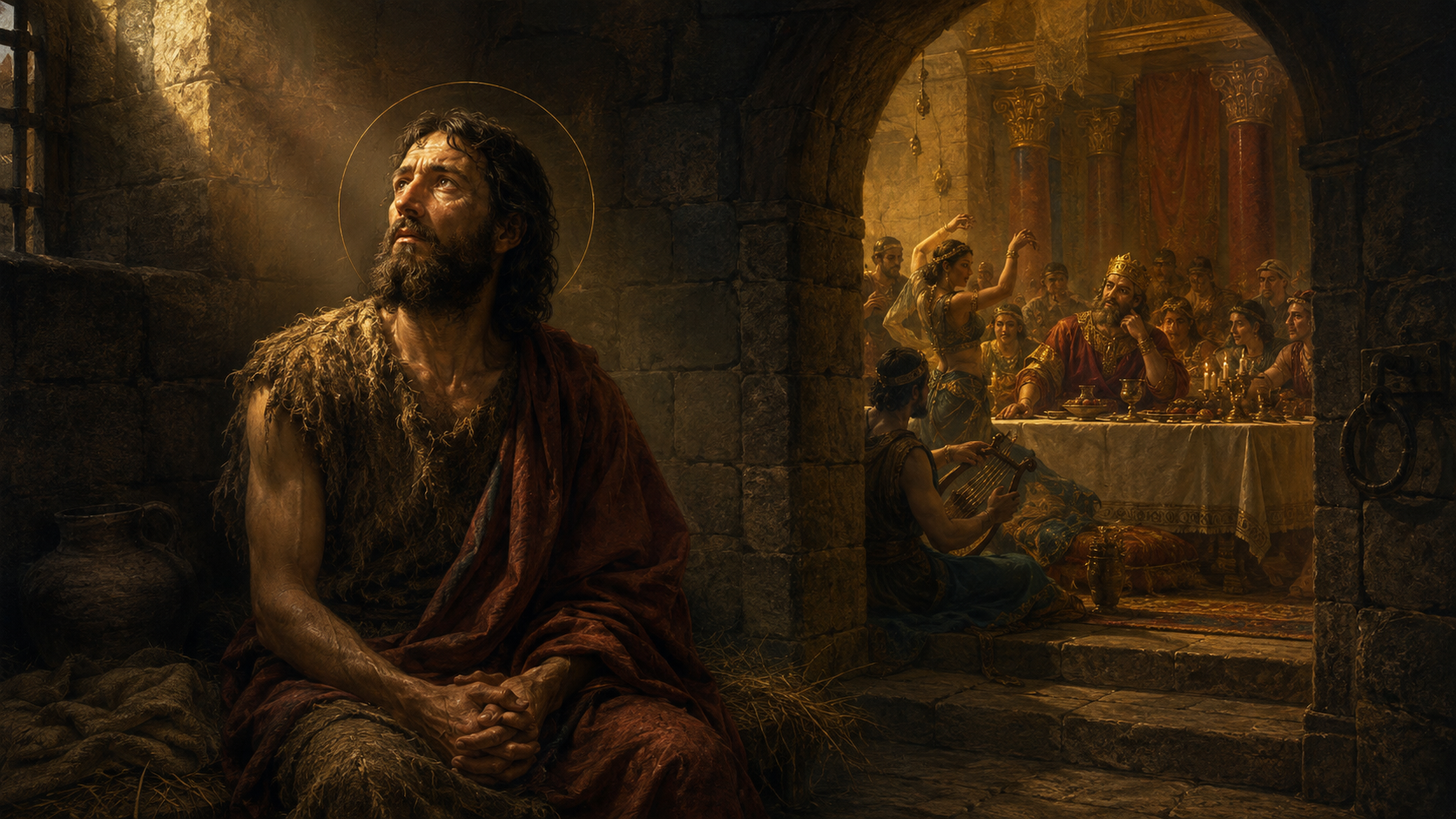
Then came Herod’s birthday banquet. Herodias’s daughter, traditionally identified as Salome, danced before Herod and his guests. Delighted by the performance, the king made a foolish public promise to give her whatever she requested. Prompted by her mother, she asked for the head of John the Baptist. Herod was distressed. Yet he was more afraid of looking foolish before his guests than he was of killing an innocent man. Rather than admit that he had made a reckless promise, he sent the executioner into John’s prison cell.
John died not because Herod had no conscience, but because Herod lacked the courage to obey it.
A martyr for the truth
Pope Francis described John as a “martyr of truth”. He was not offered freedom in exchange for denying Christ. He died because he remained faithful to the truth and would not be silenced by power, hatred or fear.
The tragedy did not begin with the executioner. It grew through a series of smaller sins: Herodias’s resentment, Salome’s vanity, Herod’s corruption and his terror of losing face. By the time John’s head was carried into the banquet, many lesser compromises had already prepared the way. That is often how evil works. There is not always a great dramatic decision accompanied by thunder and lightning. More commonly, there is one convenient silence, one flattering lie, one grudge carefully fed and one opportunity to do the right thing politely declined.
John chose another path.
“He must increase; I must decrease” (John 3:30). Those words tell us almost everything about him. John did not want followers for himself. He pointed his disciples towards Jesus, identified him as the Lamb of God and then willingly stepped out of the light. By worldly standards, John’s life ended in failure: alone, imprisoned and executed on the whim of a royal household. Yet Herod’s banquet has long since ended, his guests have disappeared and his palace has fallen silent. John’s voice is still heard wherever the Gospel is proclaimed.
What does John’s witness ask of us?
Most of us will never be required to confront a king. Our palaces are rather more modest: the family table, the workplace, the parish meeting or the WhatsApp group.
Nevertheless, there are moments when we are tempted to shave a little off the truth to make life easier. We may join in gossip because everyone else is laughing. We may remain silent when someone vulnerable is treated badly. We may conceal a mistake rather than admit it, or resent the person who tells us something we would rather not hear.
Speaking the truth does not mean becoming harsh, self-righteous or perpetually argumentative. Christian truth must be spoken with charity and humility. John wanted Herod’s conversion, not his humiliation. Courage is not measured by how loudly we can shout, particularly from the safety of a keyboard. The most difficult truth may be the one addressed to ourselves. Where am I listening to God but refusing to change? What am I protecting: the truth, or merely my reputation? Is there someone I resent because they have shown me something true?
John the Baptist stands before us without wealth, office or worldly protection. He has only his fidelity to God. It appears to cost him everything, yet it brings him into the company of Christ.
A thought to take away
Choose one small act of truthfulness this week. It may be an apology, a difficult but kindly conversation, refusing to join in gossip, admitting a mistake or bringing something honestly into Confession.
Truth does not always need a trumpet or a wilderness. Sometimes it needs only one person who will not abandon it when the room becomes awkward.