The Riddell Chalice
by John Maffin
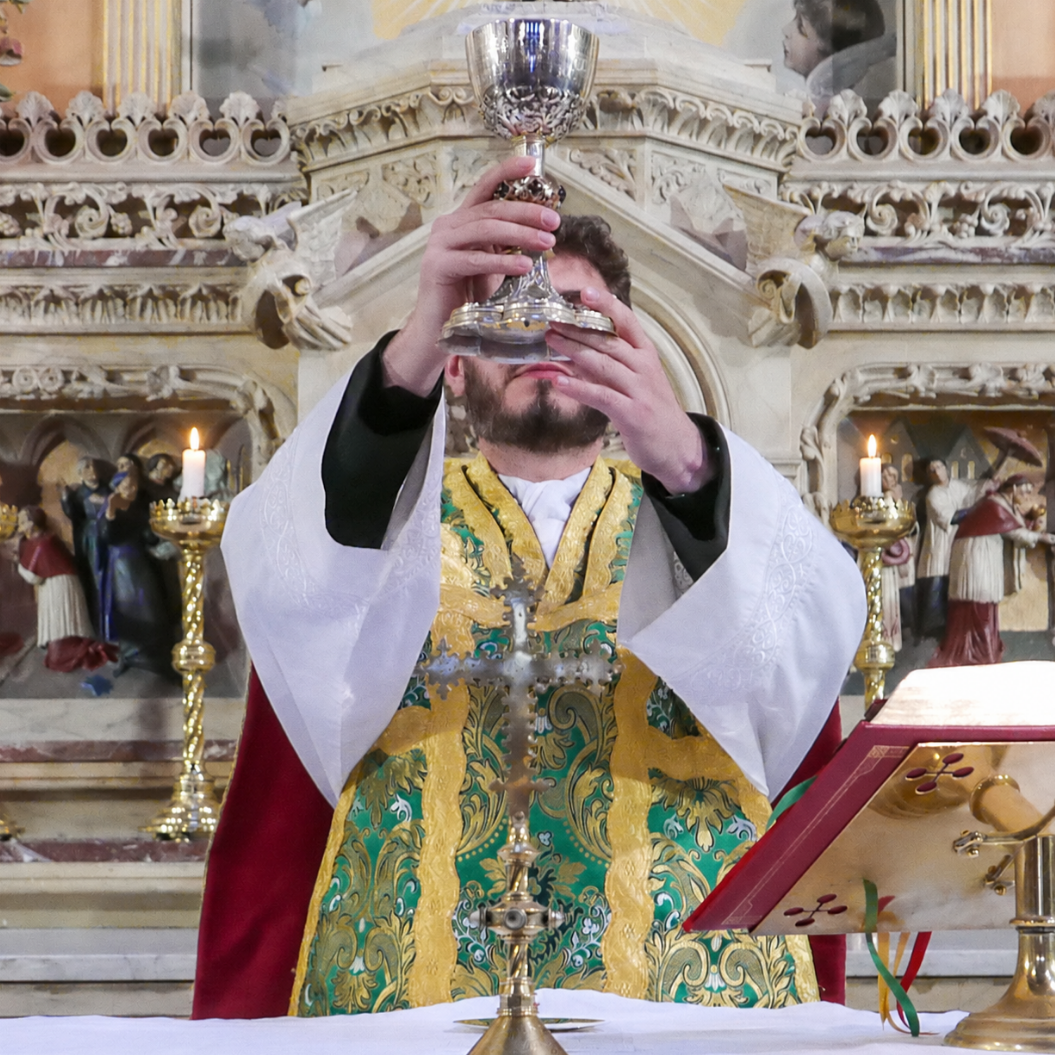
At Mass on Sunday 13th September 2026, close to the annual date specified in the surviving documents, a remarkable piece of St Charles history was once again used at the altar – namely the Riddell Chalice. The chalice is associated with Arthur George Riddell, who served for many years as a priest at St Charles before leaving Hull in 1873 to become parish priest of St Peter's, Scarborough. Seven years later he was consecrated Bishop of Northampton, where he remained until his death in 1907.
Until now, some of the story of what we call the Riddell Chalice has rested upon parish memory. Documents preserved at St Charles, together with the inscription on the chalice itself, now allow us to tell its story rather more precisely. The chalice had originally belonged to Dean Michael Trappes, parish priest of St Charles from 1848 until his death on 7 June 1873. Riddell had served alongside him for many years. When Riddell left Hull shortly afterwards, the congregation determined that he should not leave empty-handed.
A surviving parish transcription of a report from the Hull News of 27 September 1873 records that the congregation of St Charles gathered at the Pryme Street schools to make a formal presentation to him. The gifts included an illuminated address, a preaching stole, a large altar missal and the chalice. Crucially, the report states that the chalice had been bought from the executors of the late Dean Trappes.
The following part of the account gives us something more personal. The chairman expressed the hope that the chalice would remain a link between Riddell and the people he was leaving behind, and that whenever he held it he would remember the congregations of St Charles and St Patrick's. Its value was greater still, he said, because it had belonged to Dean Trappes.
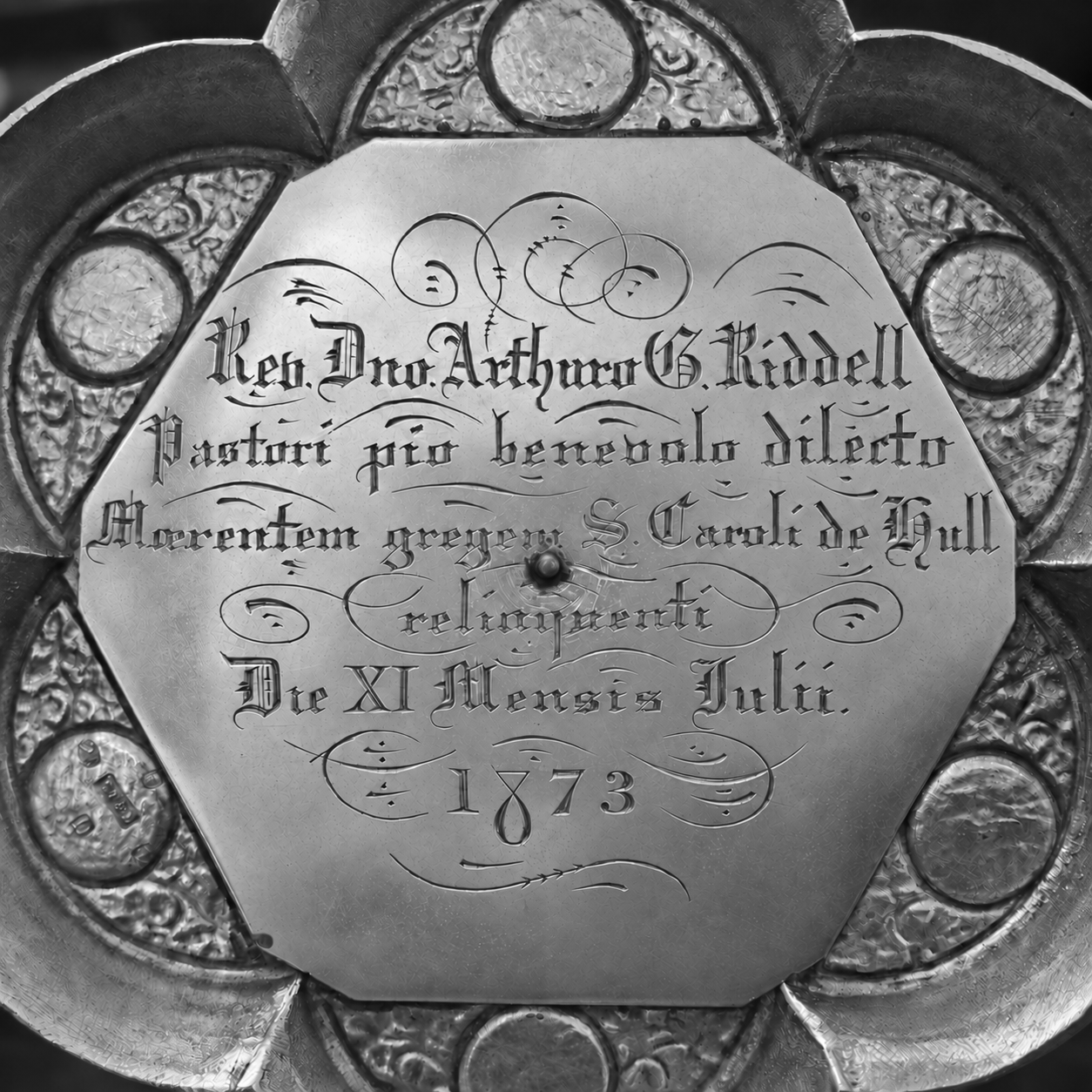
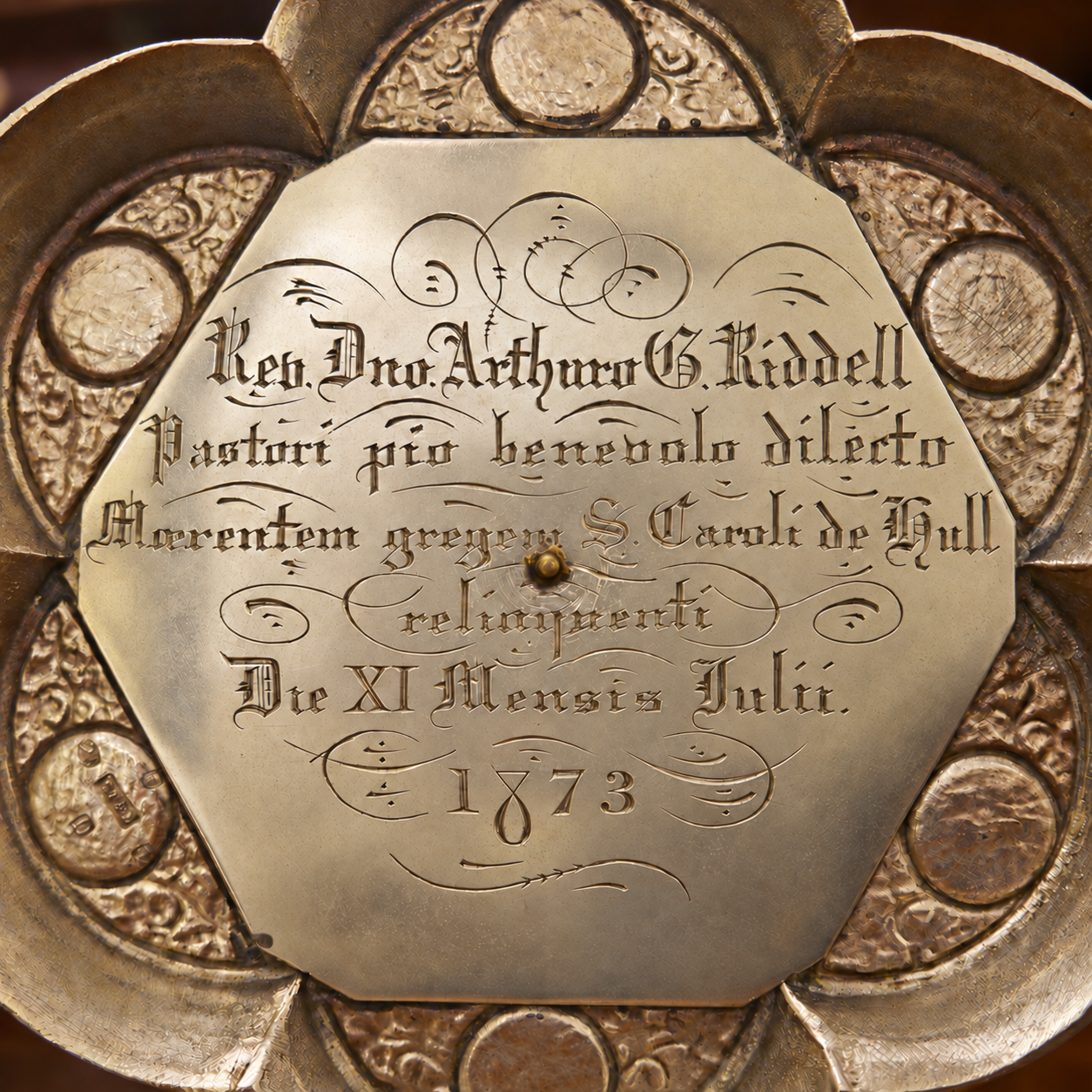
The chalice itself still carries the evidence of that farewell. Beneath its base is an elaborate Latin inscription naming Arthur G. Riddell, describing him as a pious, benevolent and beloved pastor and referring to his departure from the grieving flock of St Charles in Hull. It bears the date 11 July 1873.
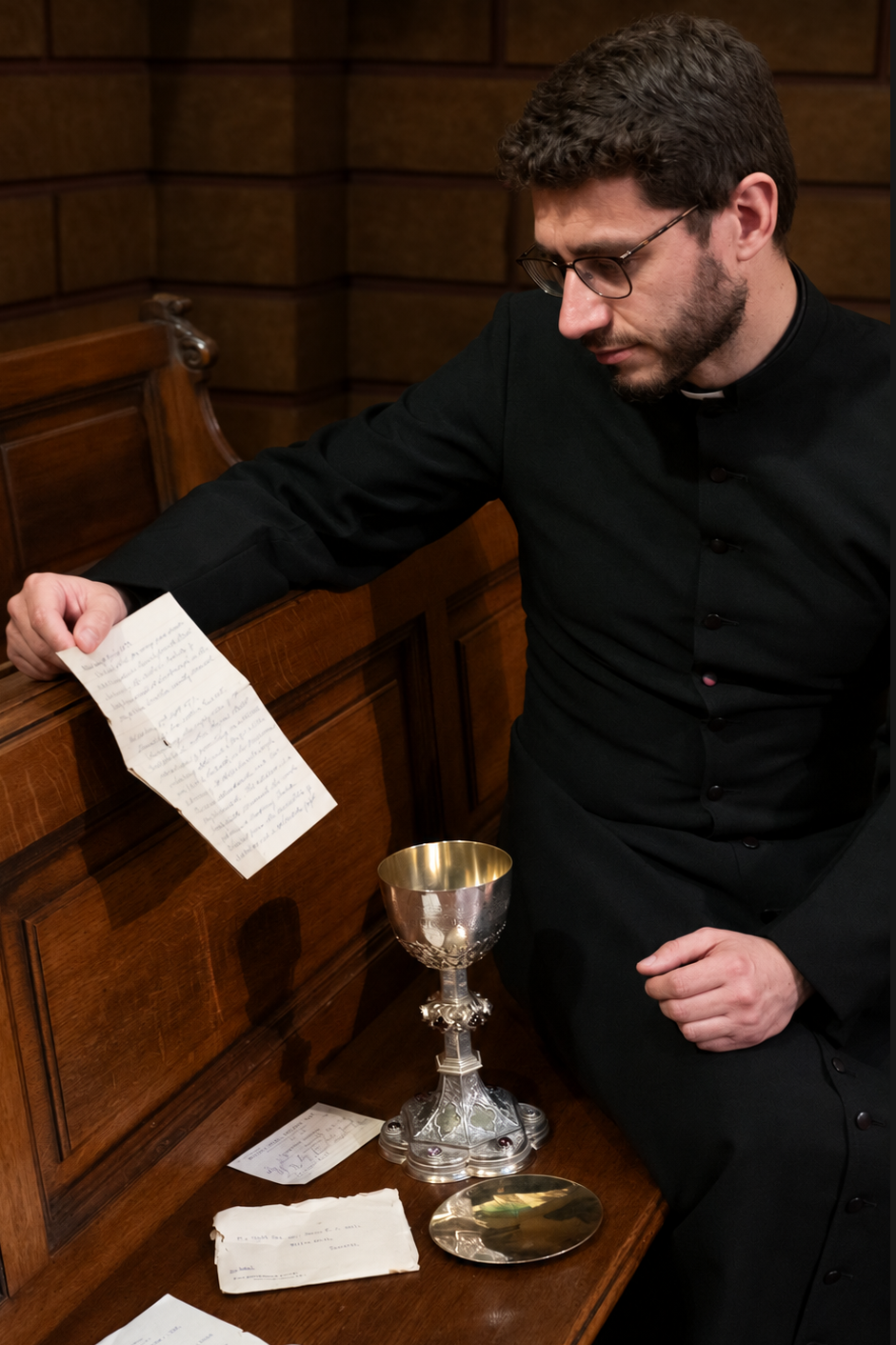
Riddell received the chalice in connection with his departure from Hull for Scarborough. And it remained associated with him through his later life as Bishop of Northampton. But its journey did not end there. Documents at St Charles reveal another chapter more than sixty years later. On 4 July 1935, Archbishop's House in Westminster wrote to Monsignor Canon F. J. Hall at St Charles concerning “Bishop Riddell's Chalice”. The letter records a direction made by Monsignor Maurice Carton de Wiart that the chalice should be given to the Bishop of Middlesbrough for use at St Charles, Hull. There was one particular condition: an annual Mass was to be offered “on or about 15 Sept. for Bp. Riddell.”
Carton de Wiart had been administrator of St Andrew's Hospital at Dollis Hill, a Catholic hospital in north-west London. That connection helps to explain why Canon Hall was later directed there to collect the chalice. That date was no accident. Arthur Riddell died on 15 September 1907, on his seventy-first birthday. A second letter from Archbishop's House, dated 4 October 1935, asked Canon Hall to call at St Andrew's Hospital in Dollis Hill, London, where the chalice would be handed to him. Then comes the decisive final piece of evidence. On the earlier letter is a handwritten note signed F. J. Hall: “The Chalice was received on October 16th 1935.” So, the chalice came home.
It had passed from Dean Trappes to the people of St Charles, from them to their departing curate Arthur Riddell, through his later life as a bishop, and eventually back to the church where the story had begun.
When it was raised again at Mass, the chalice therefore did exactly what the people of St Charles hoped it would do in 1873. It remains a link between generations: between Trappes and Riddell, between priests and people, and between Catholics who prayed in Jarratt Street more than 150 years ago and those who pray here today.